
Textile ETP launches digital transformation strategy, calling for urgent collective action across the value chain
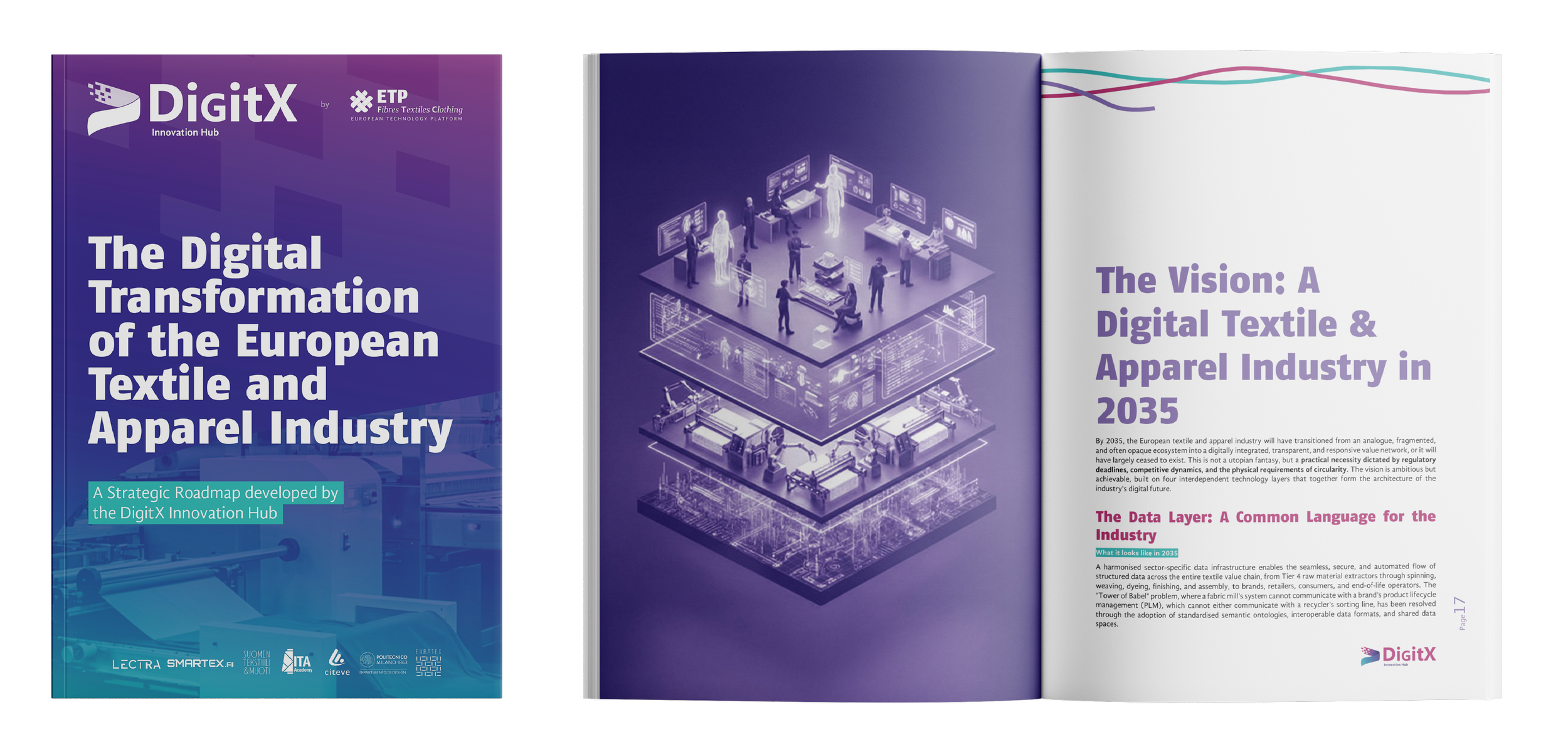
On 26 May 2026, Textile ETP’s DigitX Innovation Hub published its strategic roadmap for the digital transformation of Europe's textile and apparel industry.
Presented during the 20th Textile ETP Annual Conference in Amsterdam, and developed collaboratively by more than 100 industry experts from the DigitX Innovation Hub over six months, The Digital Transformation of the European Textile and Apparel Industry sets out a comprehensive plan to help European textile businesses become fit for the digital future, or risk losing them altogether.
The strategy identifies three converging pressures making digital transformation an existential necessity: the need for competitive agility in the face of ultra-fast global rivals; a wave of EU regulatory requirements including the Digital Product Passport and the Corporate Sustainability Due Diligence Directive; and the structural data demands of circular and service-driven business models.
“Combining the physical world of fibres and textile machines with the digital world of bits and bytes and soft factors like creativity, hands-on expertise or consumer psychology with rational and precise data-driven decision making in complex fast-paced supply chains are not easy tasks. But they must be undertaken, not only in the interest of greater competitiveness of the EU industry, but also to fully comply with a diverse set of upcoming EU regulations including the Digital Product Passport and to operate at a much higher level of sustainability and circularity in line with the vision of the EU strategy for sustainable and circular textiles.”
Marina Crnoja-Cosic, President, Textile ETP
The strategy charts a path toward a digitally integrated, transparent, and responsive European textile value network by 2035, built on four technology layers (data infrastructure, digitised hardware, interoperable software, and human-AI collaboration) and four concrete innovation building blocks: Data Infrastructure, Digital Product Creation, Digital Production, and Digital Supply Chain.
The roadmap also presents ten recommendations to EU policy makers, with four identified as highest priority: explicitly linking sustainability regulation to digitalisation and competitiveness; mandating interoperability and open standards for publicly funded digital innovations; establishing and funding a European Textile Data Space with 500+ active participants by 2030; and funding the collaborative development of a harmonised Textile Data Ontology.
“The priority now should be implementation: making sure that digital solutions are accessible, affordable and relevant for companies on the ground. If Europe wants a competitive, circular and resilient textile and apparel ecosystem, digitalisation must become a practical enabler for industry, not an additional layer of complexity.”
Mario Jorge Machado, President, EURATEX
Finally, the strategy identifies five cross-cutting actions that no single stakeholder can accomplish alone: co-developing a European Textile Data Ontology; building shared digital fabric libraries; establishing end-to-end Digital Product Passport data flows; creating feedback loops between recyclers and designers; and developing a cross-border digital skills and talent pipeline.
Concrete implementation strategies for the key recommendations will be developed in the second half of 2026, following the strategy’s public presentation at the 20th Textile ETP Annual Conference.
