Circular & Biobased Textiles Innovation Hub

Where European Sustainable Textile Experts Meet
Together with STFI (DE), RISE (SE), Centexbel (BE), Centrocot (IT), and CETI (FR), Textile ETP launched the Circular & Biobased Textiles Innovation Hub to help textile companies, research organisations, brands and retailers to learn, network and collaborate on the hot topics of circular and biobased textiles.
Combining online and in-person events, the Innovation Hub offers a wide scale of formats and targets a broad range of textile sustainability and circularity topics, so that textile professionals from different backgrounds can all find relatable and valuable content.
We look forward to welcoming you among our Innovation Hub members!
Upcoming activities
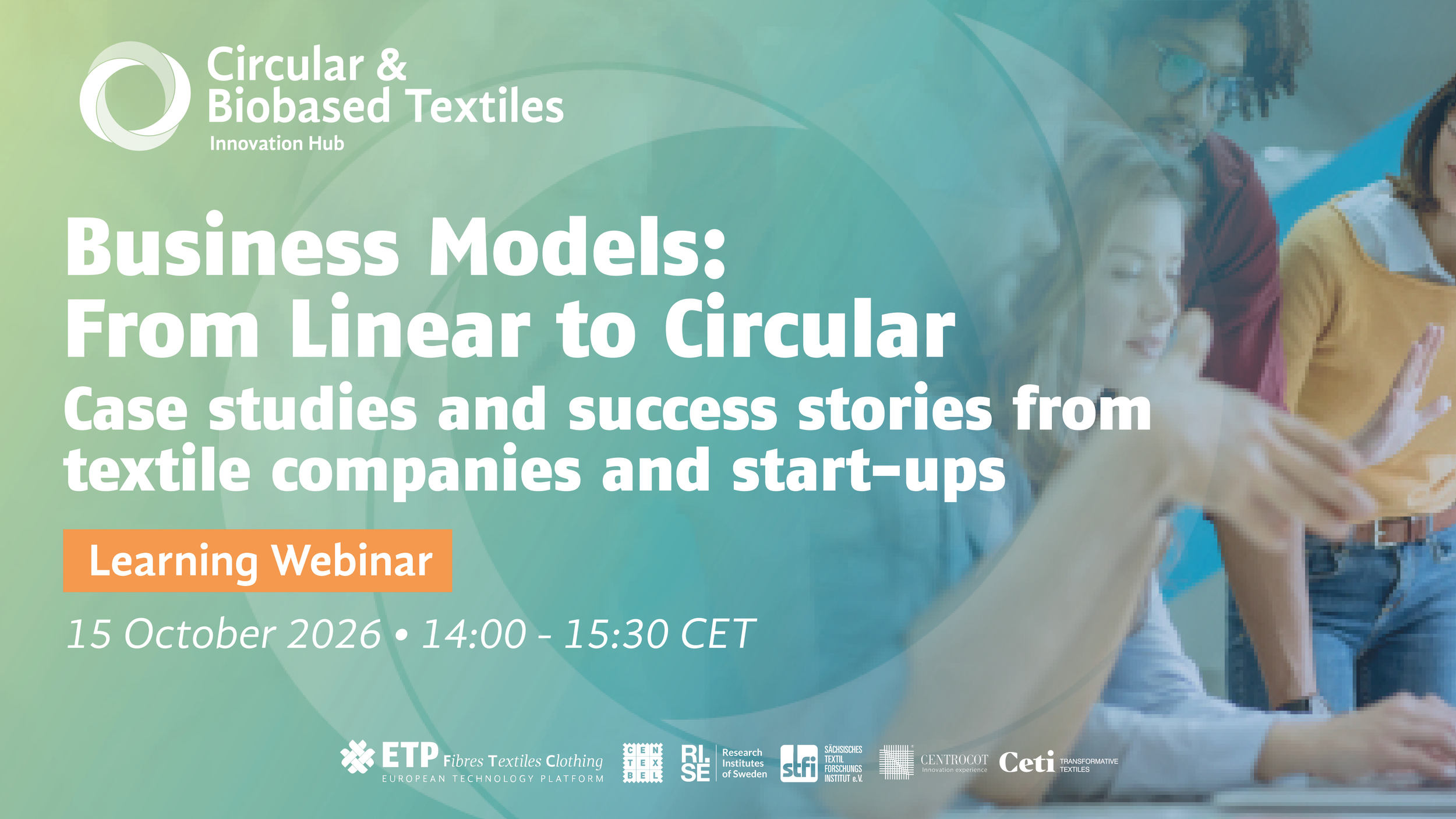
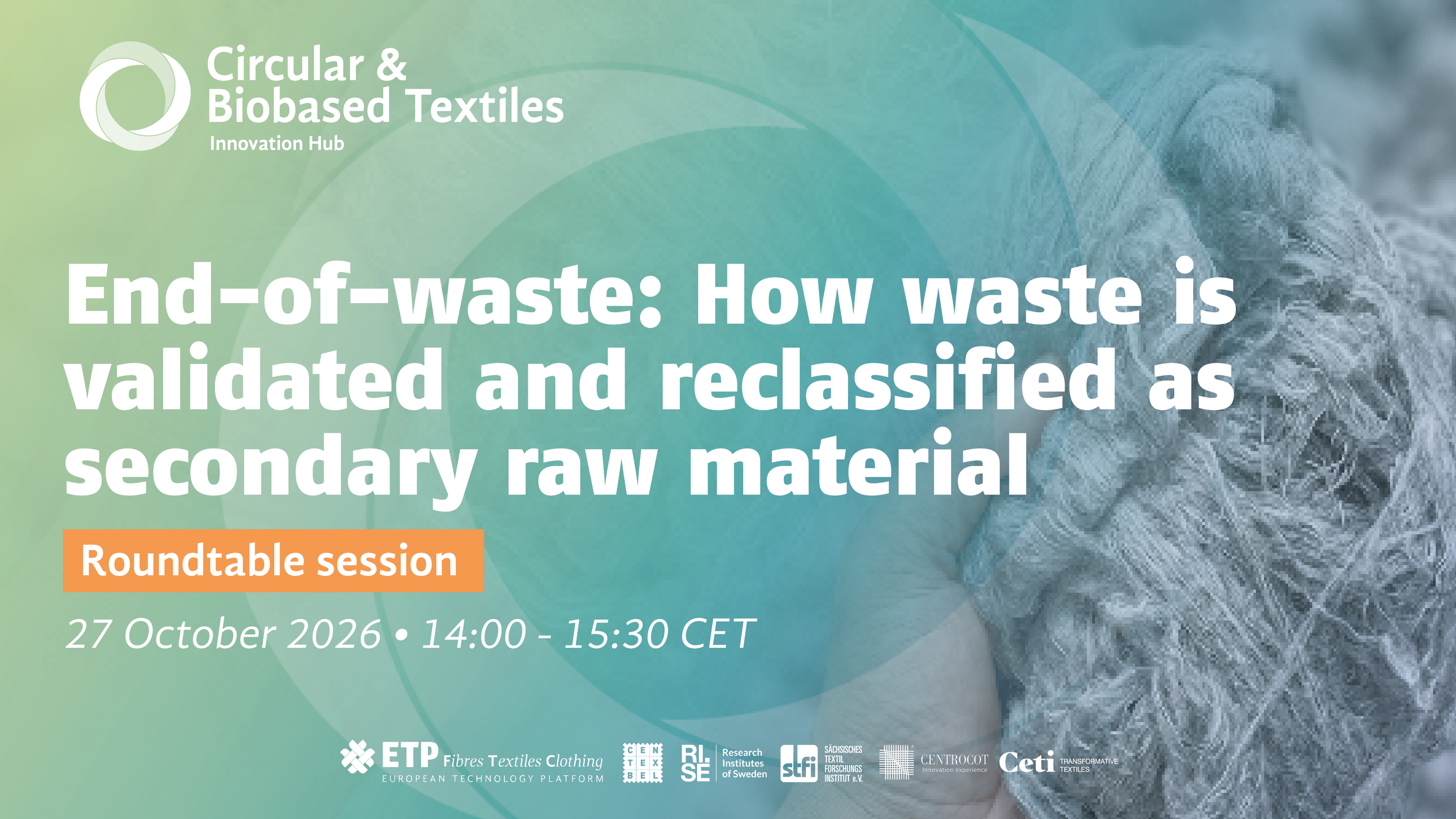
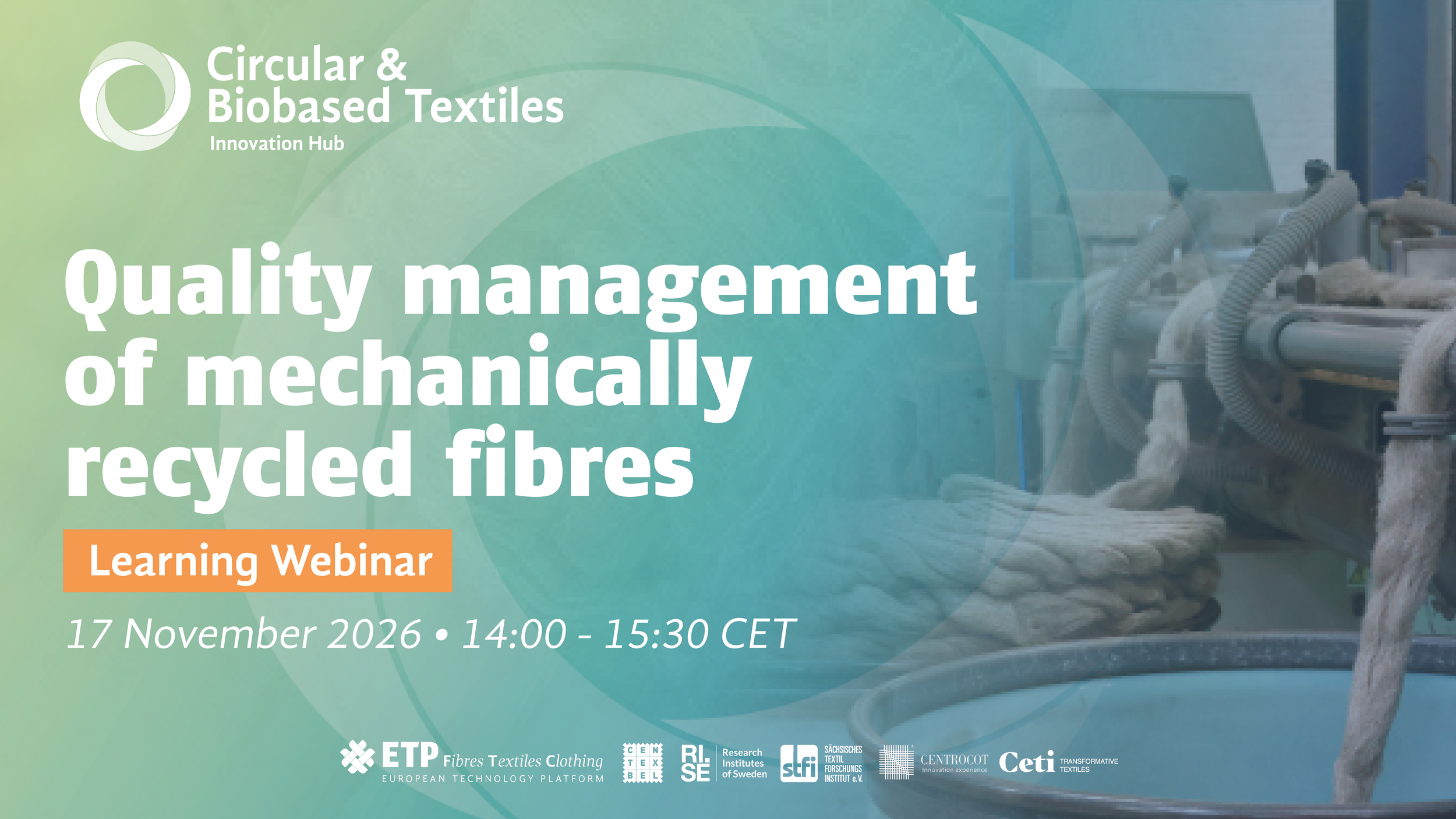
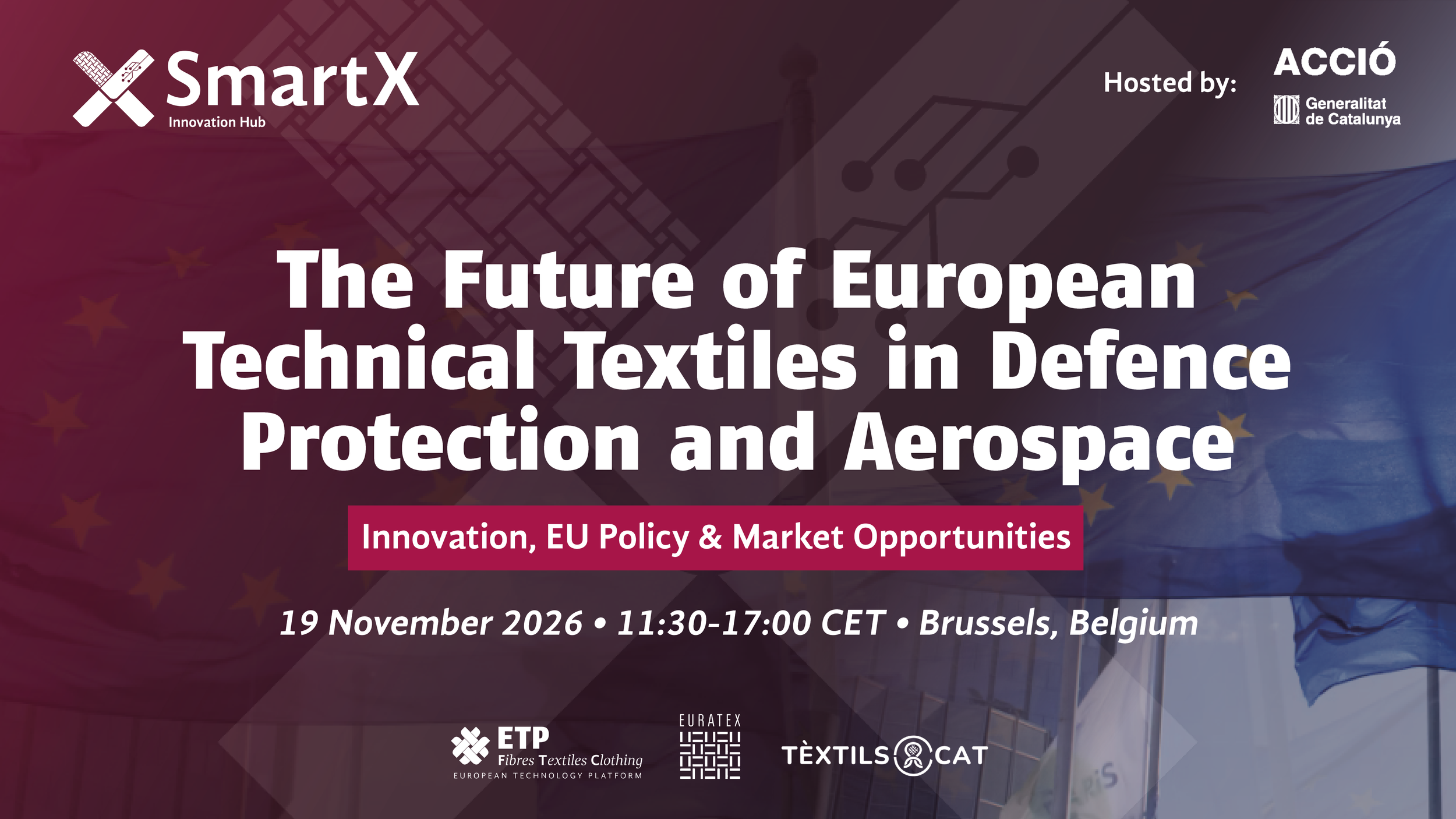
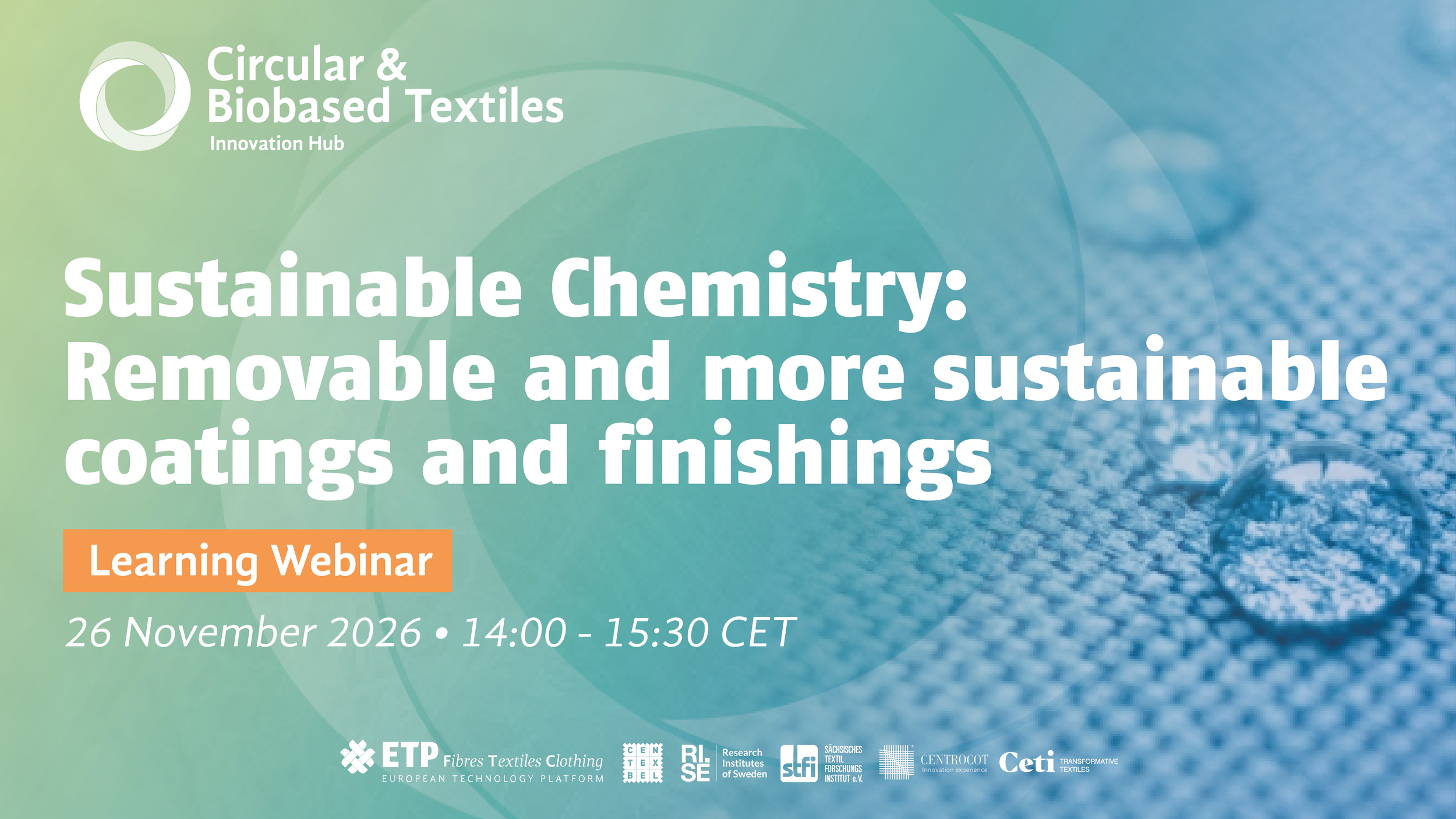
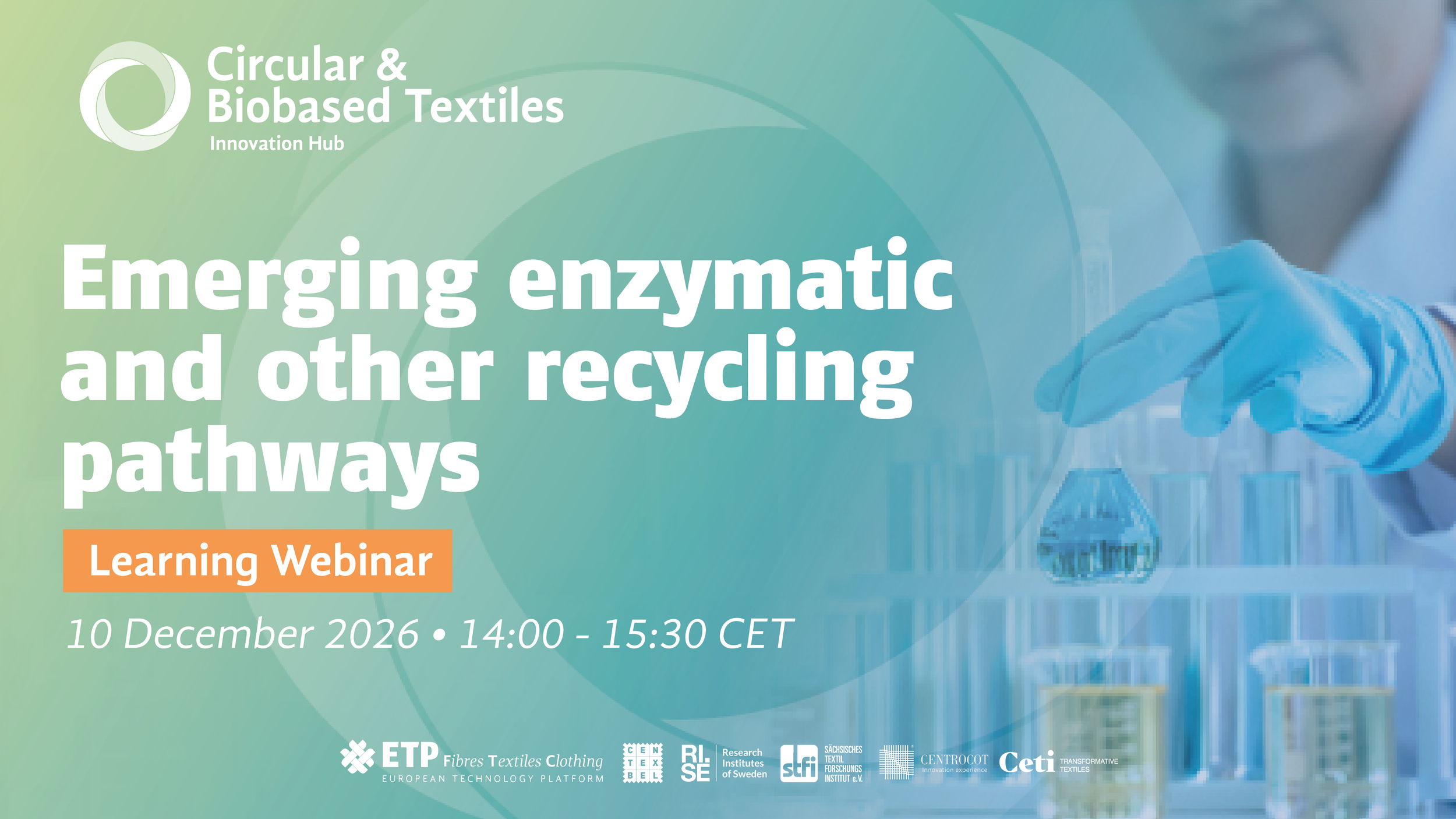


Today, sustainability and circularity are at the heart of textile innovation.
In its 2022, EU Strategy for Sustainable and Circular Textiles, the European Commission presented a vision and related European policy objectives for a green and digital transition of the European textile ecosystem. The strategy focuses on key textile sustainability aspects, such as eco-design, waste and pollution prevention, safe and biobased materials, circular material flows, responsible supply chains and new business models and more.
European textile professionals are all working towards ambitious goals to follow the direction the EU Strategy has set.
In this Innovation Hub, we offer a platform for discussions, collaboration, access to information and learning, an opportunity to come together and jointly tackle the challenges – because together, we go further.
Discover the calendar of activities in the brochure
Check FAQs. Read the Terms & Conditions.

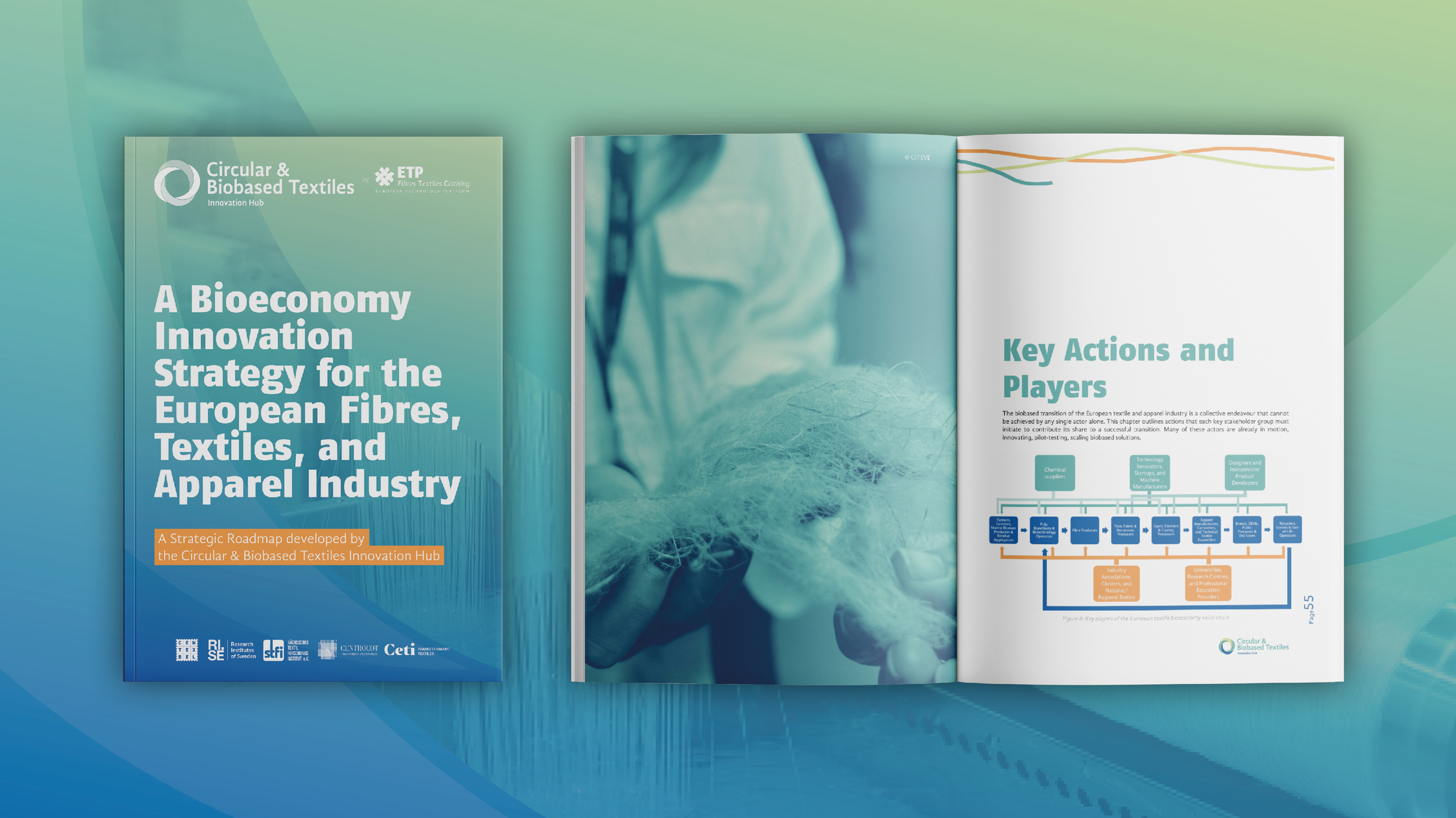
Bioeconomy Innovation Strategy for the European Fibres, Textiles, and Apparel Industry
Why now?
The European fibres, textiles and apparel industry (194,000 companies, 1.2 million workers, €166 billion in annual turnover, overwhelmingly composed of SMEs) rests on a material base facing both environmental and strategic competitive challenges. Roughly two thirds of the textile fibre Europe consumes is fossil-derived, and the biobased share has declined almost without interruption for fifty years. Three converging imperatives make the biobased transition an existential necessity rather than a strategic option.
First, sustainability: global per-capita fibre consumption has risen from 8.3 kg in 1975 to 16.2 kg in 2024 and is still climbing, with the additional demand met almost entirely by fossil synthetics. Second, strategic resilience: over 90% of global polyester capacity sits in Asia, with a comparable concentration emerging for polyamide, acrylic and man-made cellulosics, leaving Europe structurally dependent for the raw materials of an industry that makes mission-critical products for healthcare, safety, transport and food production. Third, competitiveness: the EU Bioeconomy Strategy names fibres and textiles a priority lead market, and the surrounding regulatory framework (ESPR and its Digital Product Passport, the upcoming Biotech Act, Extended Producer Responsibility) creates a uniquely favourable environment for European innovators to scale ahead of global competitors.
Objectives
The Bioeconomy Innovation Strategy for the European Fibres, Textiles, and Apparel Industry presents a coherent and forward-looking vision for the biobased and circular transformation of Europe's textile material base. It has been developed as a collective exercise within the Circular & Biobased Textiles Innovation Hub, bringing together industry, research organisations and clusters from across the European biotextile value chain, with input from sector and material-specific representative bodies in the European chemicals, nonwovens, cotton, wool, flax and hemp industries. The strategy aims to:
articulate a shared 2050 vision in which biobased and circular materials account for at least half of all fibre consumed in Europe, with the value chain that produces them rooted here;
identify the five core building blocks, innovation priorities and technology enablers required to deliver on that vision, underpinned by a purpose-built quantitative model of EU-27 fibre consumption from 2000 to 2050;
assign concrete roles and actions to each stakeholder group across the value chain, from farmers and foresters to brands, recyclers and educators; and formulate clear, evidence-based recommendations to EU policy makers and programme managers.
It is intended both as a strategic compass for industry actors and as a structured input to ongoing European policy and funding decisions affecting the textile sector. The Bioeconomy Innovation Strategy for the European Fibres, Textiles, and Apparel Industry was published in September 2026 and presented at the 4th ECOSYSTEX Conference.
The Innovation Hub Activities

Learn
Engage and learn in live online sessions (max 1h30), offered 2-3 times a month. Listen to presentations about recent circular and biobased textiles innovations, pick the brain of experts and discuss the textile sector's sustainability challenges with industry insiders. Delve into the recordings of the previous Innovation Hub activties (as well as our Innovation in Circular and Biobased Textiles Masterclass video library of 80+ recorded expert presentations).

Network
Participate in online networking sessions, browse through the contact database of your fellow Innovation Hub members, or join us at one of the in-person meet-ups at the largest European trade fairs and textile conferences. You will also get the chance to visit open innovation facilities.

Collaborate
Discuss the textile sector's sustainability challenges with your peers in interactive co-design sessions or ad-hoc working groups, set up occasionally to address concrete issues with a short timeline.

Share
Publish your news in the Innovation Hub newsletter and share it with your fellow Hub members. Boost your visibility by sharing your content also via our LinkedIn. Use this opportunity to present your innovative solutions/research developments in one of the webinars or host a workshop and lead the discussion.

Pricing and packages
A full-year learning and networking programme for the price of a 2-day conference ticket.
The membership in the Innovation Hub is a yearly recurring subscription, automatically renewed each year in January (see FAQs for the cancelations conditions). New joiners subscribing as of 1 July each year will be invoiced 60% of the yearly fee for the running calendar year. They will be automatically invoiced the normal yearly fee in January of the next calendar year, and all following years.
The Innovation Hub is for European textile professionals with interest in sustainability, circularity and biobased textiles from:
Small, medium and large companies across the entire supply chain
Research/testing institutes and university departments
Professional associations and clusters
Consultancies and independent experts
Who should subscribe and why?

The webinars and workshops are structured around the five most important innovation themes of textile circularity and sustainability. They cover:


-
What new biobased fibres are available and for which type of products/applications are they suitable?
What do you need to know when processing innovative biobased fibres?
-
What are the requirements, options and technologies for replacing hazardous processing and functionalisation chemicals?
How to avoid/minimise emissions of chemicals and microplastics from textile products during production, use and end-of-life?


-
How to manage/optimise your supply chain to fulfil environmental, social, health and safety requirements?
What data, standards or certificates are needed/helpful to manage textile sustainability?
-
What is the technical state-of-the-art and latest developments of different recycling technologies?
What recycled materials are available, what are their properties and limitations?


-
Shape the programme! We will regularly encourage you to provide feedback and suggest topics that you would like to discuss, allowing for flexibility in addressing challenges, research developments and innovations as they arise.
-
What are the requirements and best practices of eco-designing textile and clothing products?
How to design for durability, repairability, recyclability?
Circular & Biobased Textiles Innovation Hub’s News and Events
Latest News




Upcoming activities
The Innovation Hub Members
The logos displayed showcase only a selection of our Innovation Hub members. Some members have chosen to remain private and are not featured on our website.