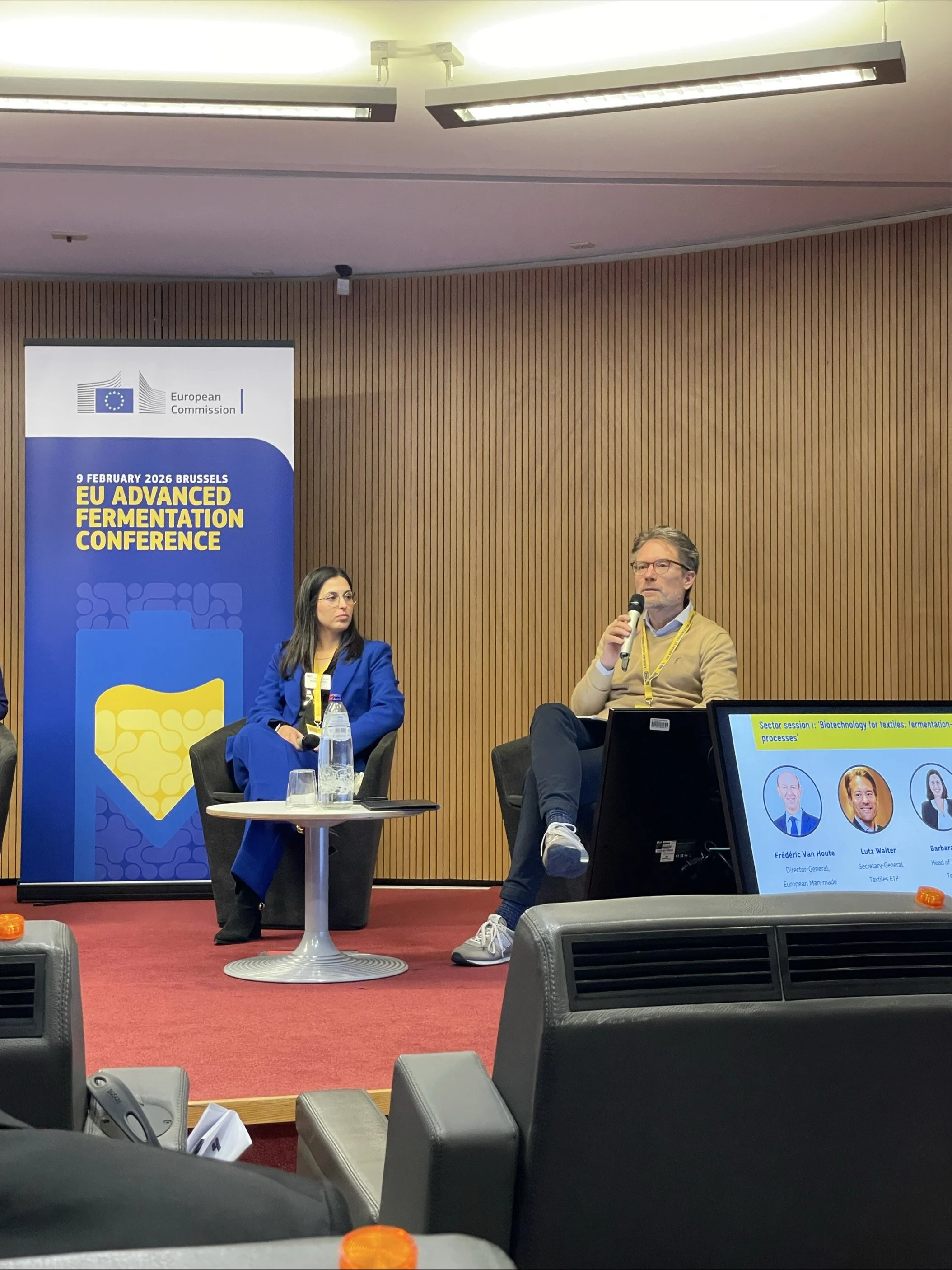
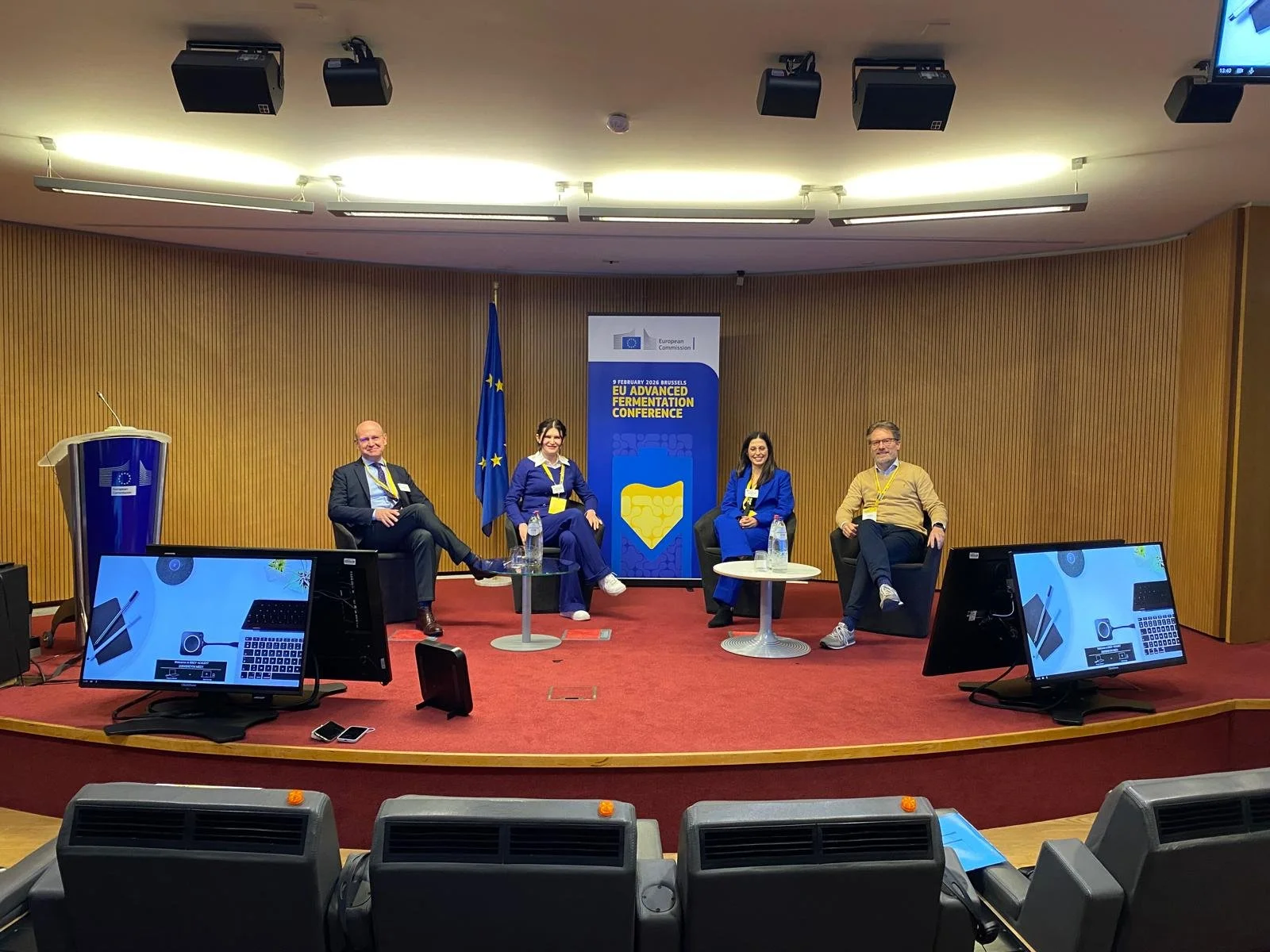
Textile ETP speaks about biotechnology for textiles at the EU Advanced Fermentation Conference
On 9 February 2026, Textile ETP Secretary General Lutz Walter spoke at the EU Advanced Fermentation Conference on biotechnology for textiles, focusing on fermentation-driven materials and processes. He was joined by Barbara Leite from RDD Textiles, Fabiana Fantinel from CO2BioClean, with Frederic Van Houte from the European Man-made Fibres Association moderating the session.
The discussion highlighted how biobased textile innovations, from novel biopolymer-based fibres to bacterial or enzymatic processes for textile colouration or finishing, could transform textile production. The panel explored both the opportunities and the practical challenges of scaling these technologies from lab to factory, and from capsule collection to standard production run.
The key takeaway is that bringing biobased textile innovations to market offers enormous potential, but realising it will require close science-industry collaboration, value chain alignment from feedstock to end market and conducive policy, from enabling legislation to demand-side measures like Green Public Procurement.
Lutz Walter also emphasised that Textile ETP, through its Circular & Biobased Textiles Innovation Hub, will develop a comprehensive Biobased Textile Innovation Strategy as an input to the EU’s Bioeconomy Strategy.
This Conference was organised by the European Commission in Brussels to connect stakeholders, foster collaboration and promote knowledge exchange. Both the Life Sciences Strategy (July 2025) and the Bioeconomy Strategy (November 2025) recognised the potential of advanced fermentation technologies - like biomass and precision fermentation. These technologies can be used to produce a wide spectrum of high-end products from renewable raw materials with low environmental impact. Products include a wide variety of sustainable food ingredients (e.g. natural colorants, low caloric sweeteners), biopolymers (e.g. spider silk), cosmetics or biosurfactants, biopesticides and chemicals.