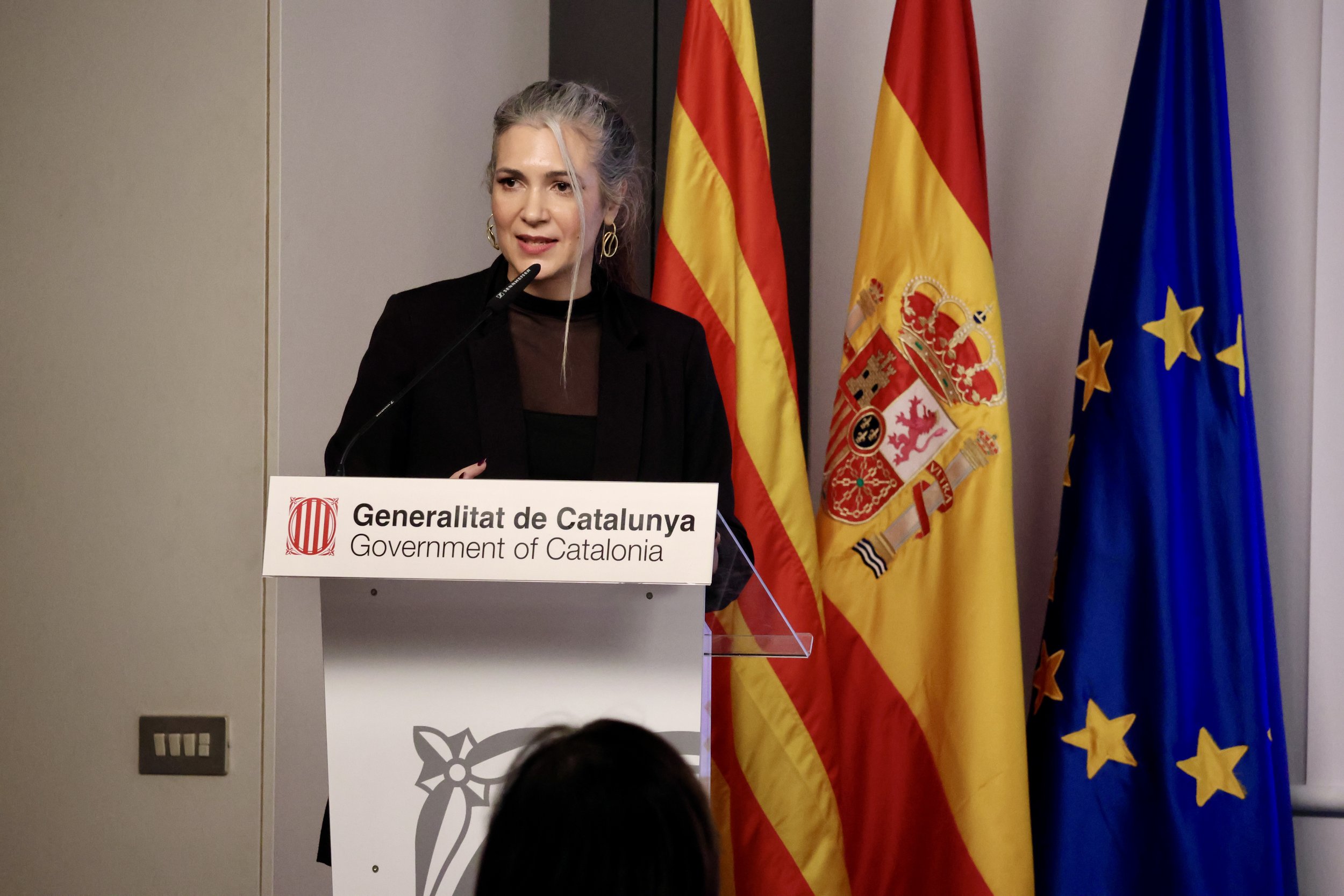
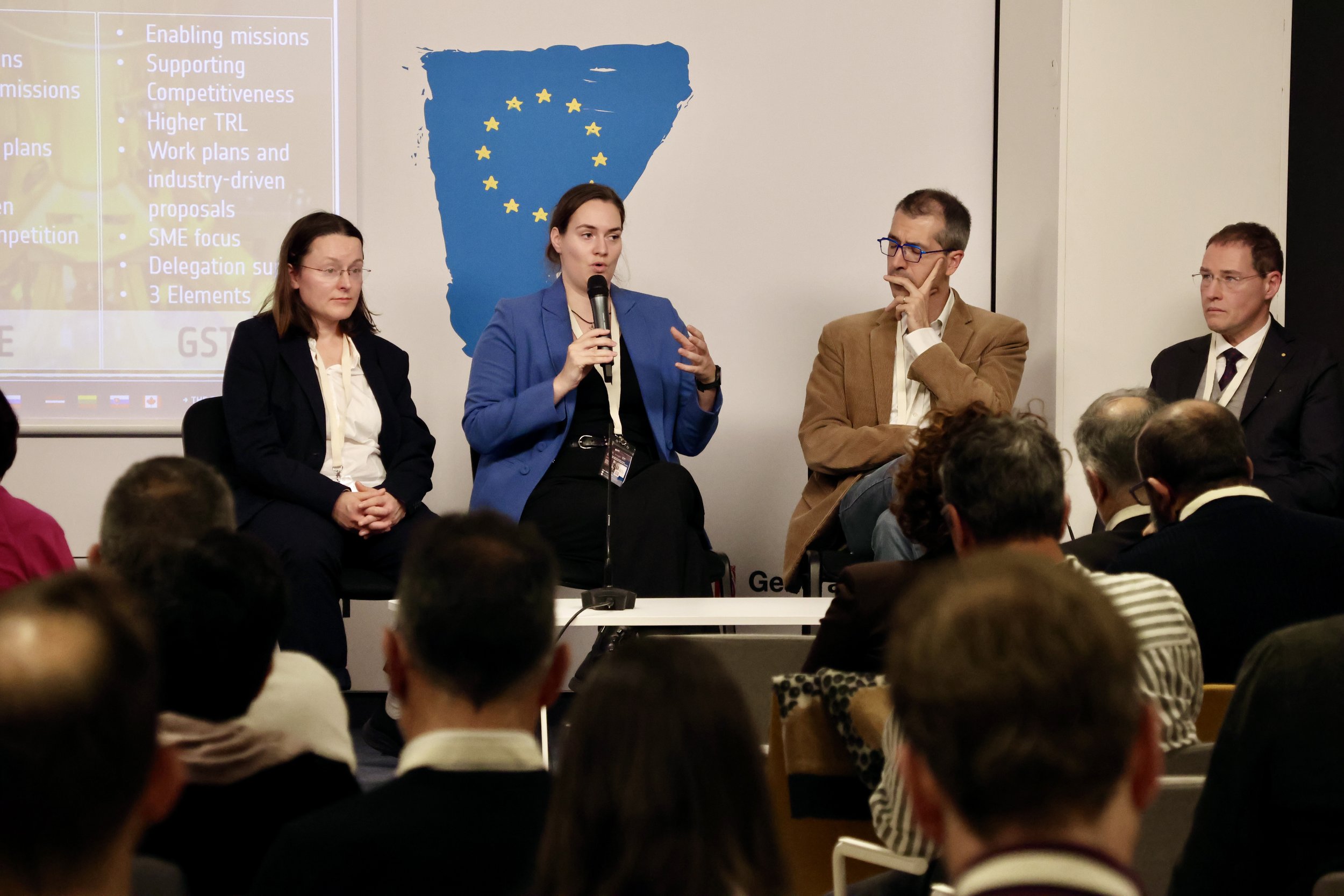
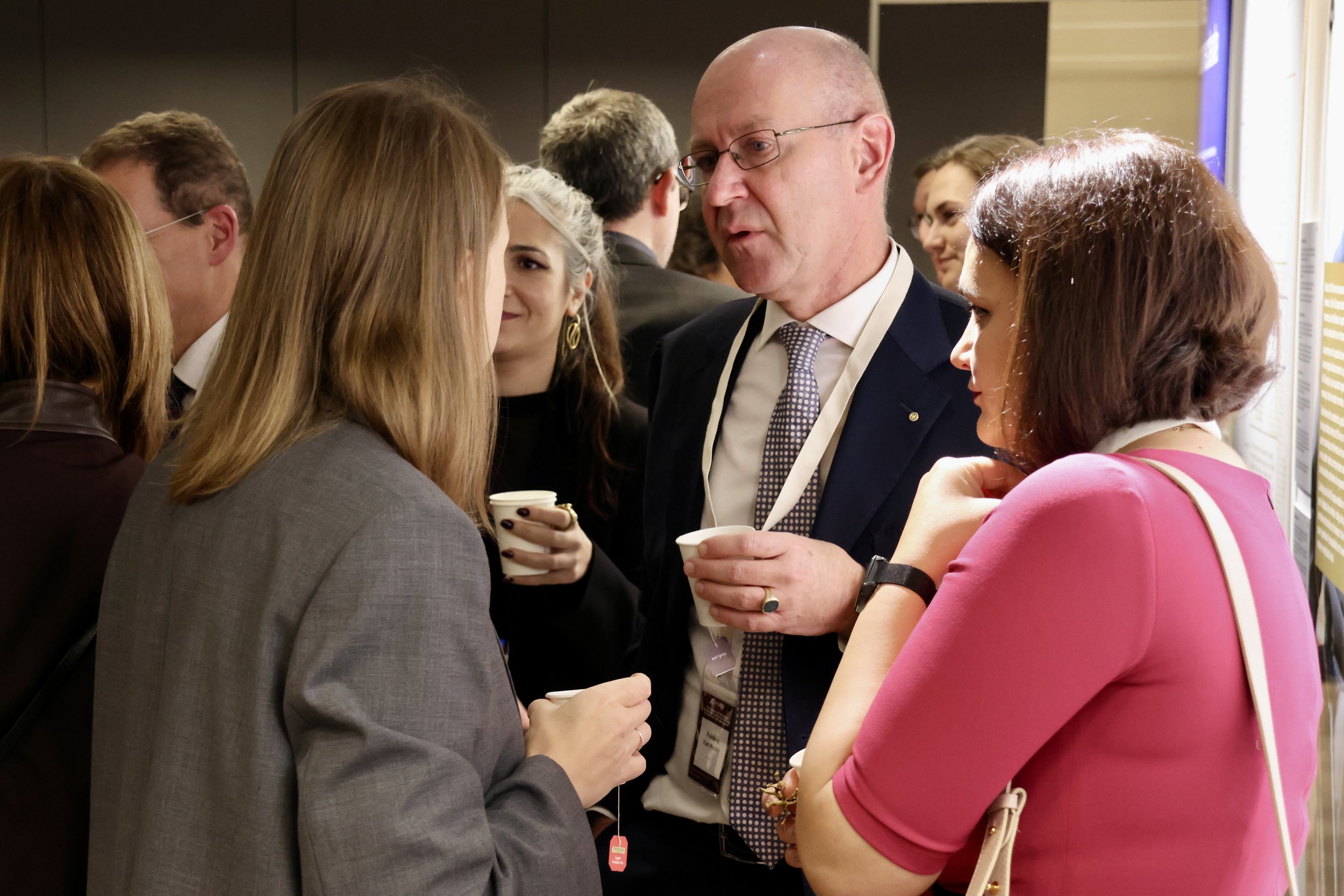
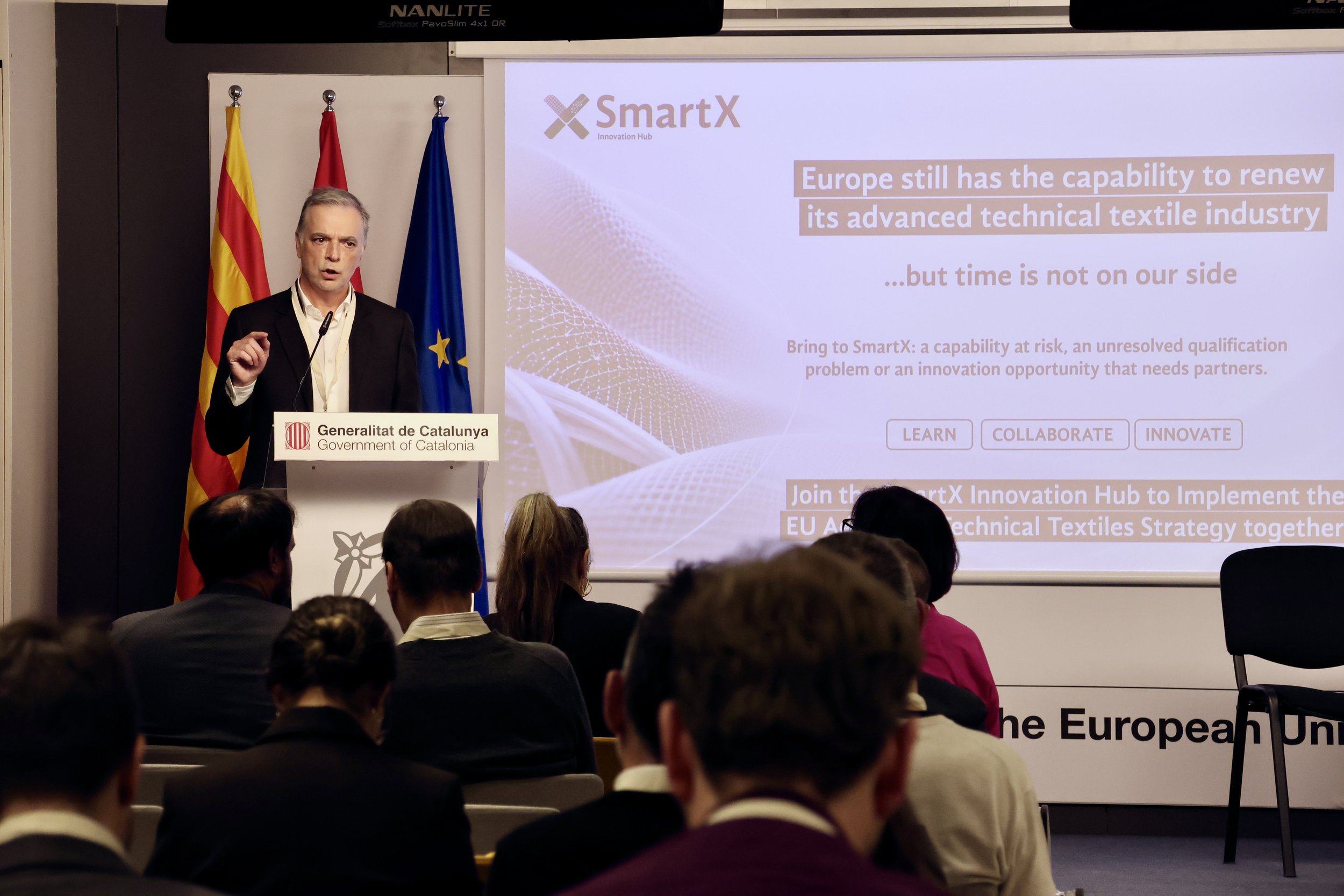
On 19 November 2026, 75 professionals from industry, research and EU institutions gathered in Brussels for '‘The Future of European Technical Textiles in Defence, Protection and Aerospace’. Co-organised by Textile ETP's SmartX Innovation Hub and EURATEX, and hosted by ACCIÓ - the Delegation of the Government of Catalonia to the European Union, the afternoon brought together EU policymakers, industry leaders and end-market experts to discuss innovation, EU policy and market opportunities for one of Europe's most strategic industrial sectors.
The context explains the urgency. EU production of technical and industrial textiles has fallen by 37% since 2000, and since 2014 the EU has imported more technical textiles than it exports. At the same time, rising defence spending, preparedness needs and new EU regulation are reshaping the market, while established applications such as automotive and construction stagnate. Against this backdrop, the event marked the launch of the new SmartX Innovation Strategy for Advanced Technical Textiles, and looked at what Europe needs to keep, and grow, its technical textile capabilities.
Part one: the policy context and the Strategy
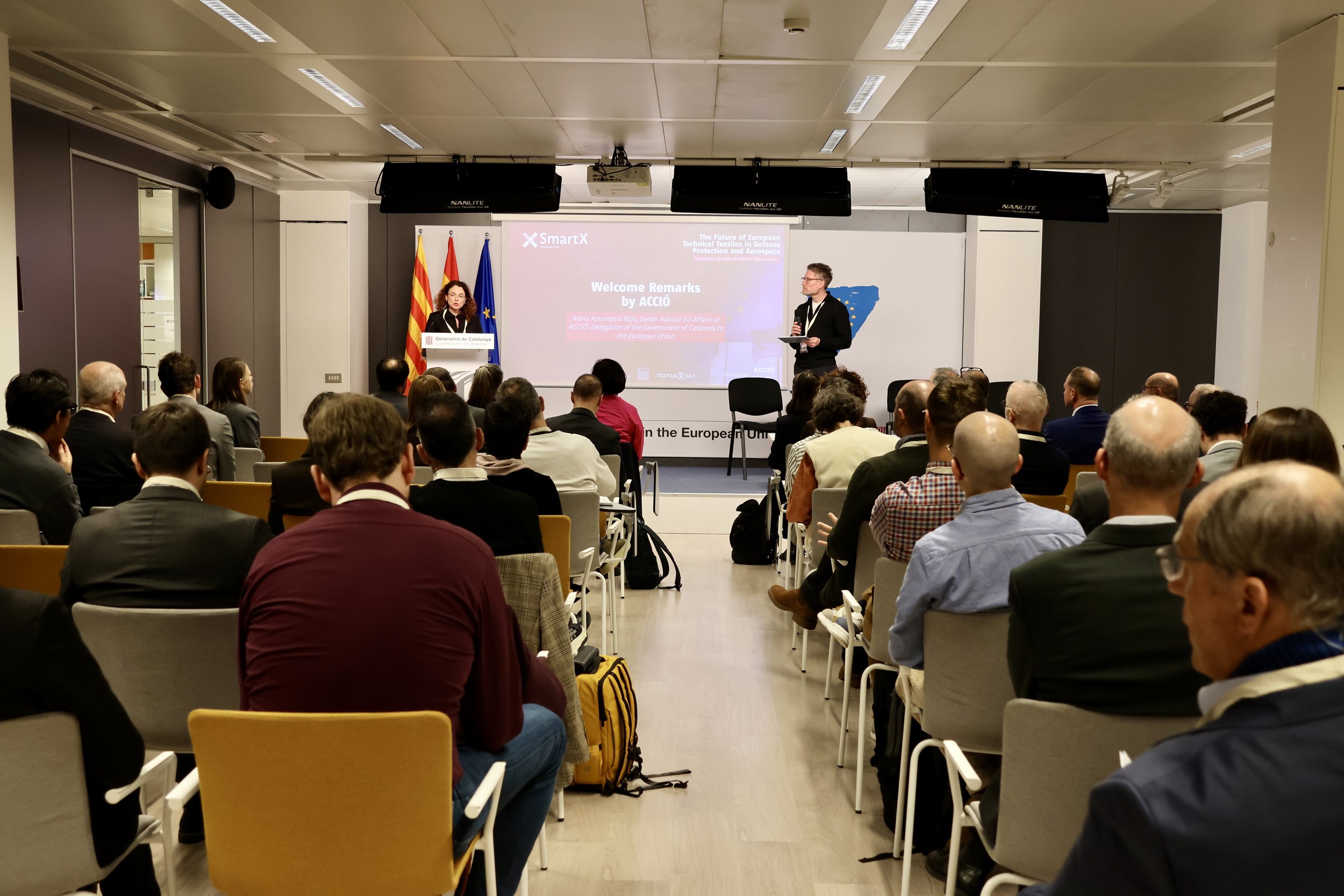
The event opened with welcome words from Lutz Walter, Secretary General of Textile ETP, and Mario Jorge Machado, President of EURATEX. They were followed by Maria Assumpció Rojo, Senior Advisor EU Affairs at our host ACCIÓ - Delegation of the Government of Catalonia to the European Union, and Josep Casamada, Senior Project Manager at Tèxtils.CAT.
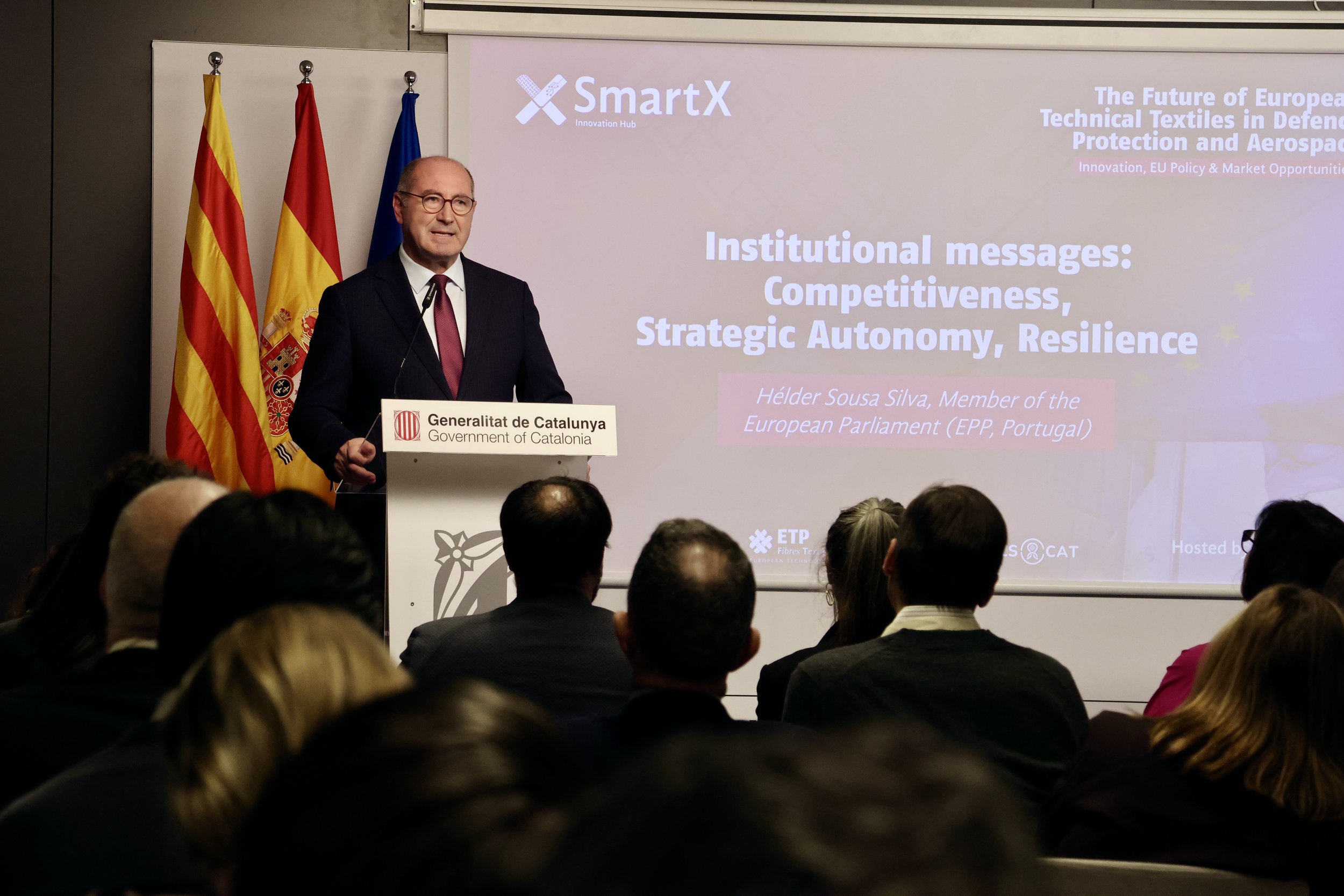
The institutional session on competitiveness, strategic autonomy and resilience then set the policy scene for the rest of the afternoon. Stefano Soro, Head of Unit Sustainable Products & Textiles at the European Commission's DG GROW, and Hélder Sousa Silva, Member of the European Parliament (EPP, Portugal), shared the institutional perspective on how Europe can strengthen the competitiveness and resilience of its technical textiles industry.
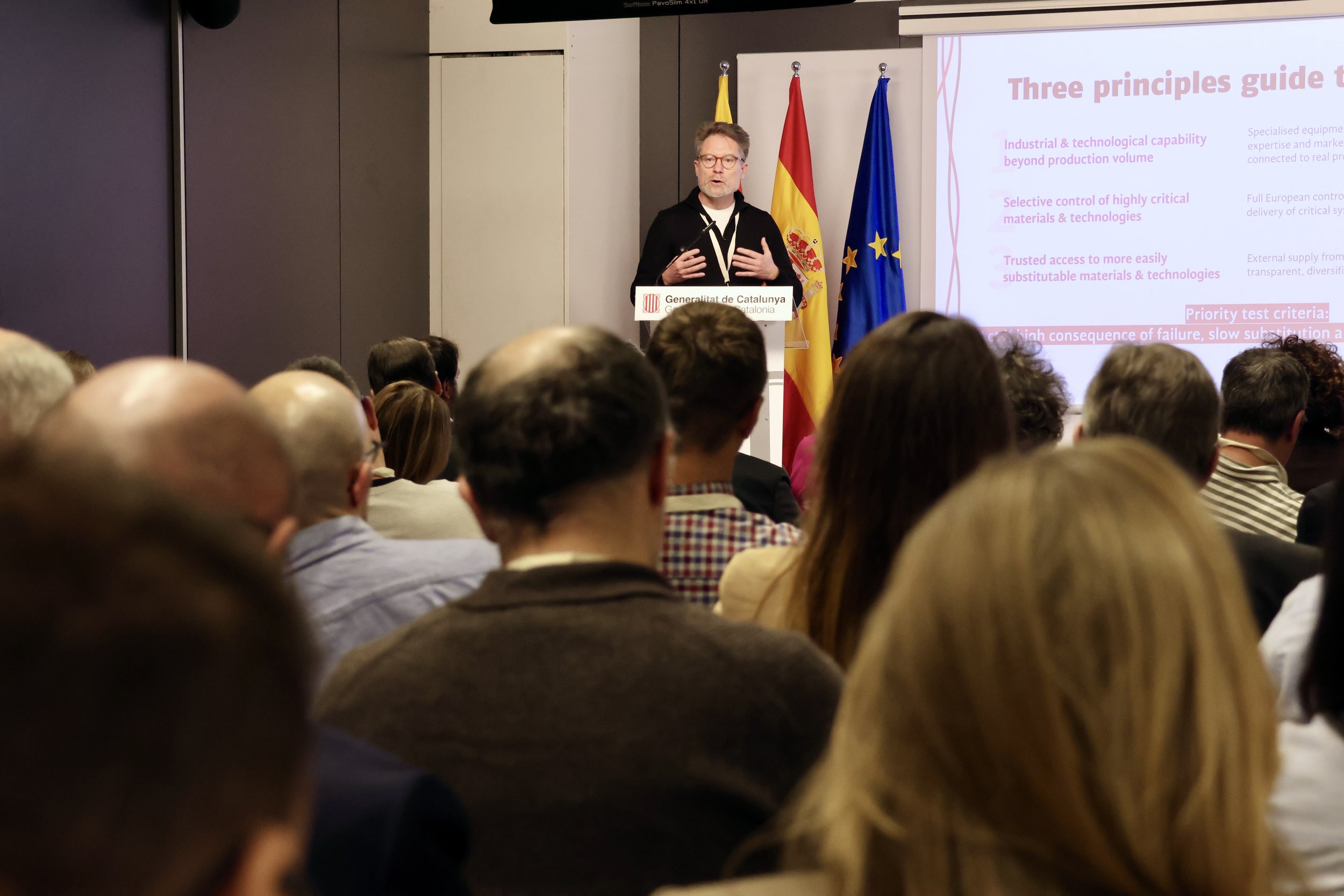
The event also invited Michał Spiechowicz, Policy Officer at the European Commission's DG DEFIS, who explained that aerospace and defence are among the priorities of the upcoming EU framework on advanced materials. He also announced a Commission study on advanced materials dependencies for space and defence, and invited textile organisations to contribute so that the sector's critical needs are properly mapped.
Launching the SmartX Innovation Strategy for Advanced Technical Textiles
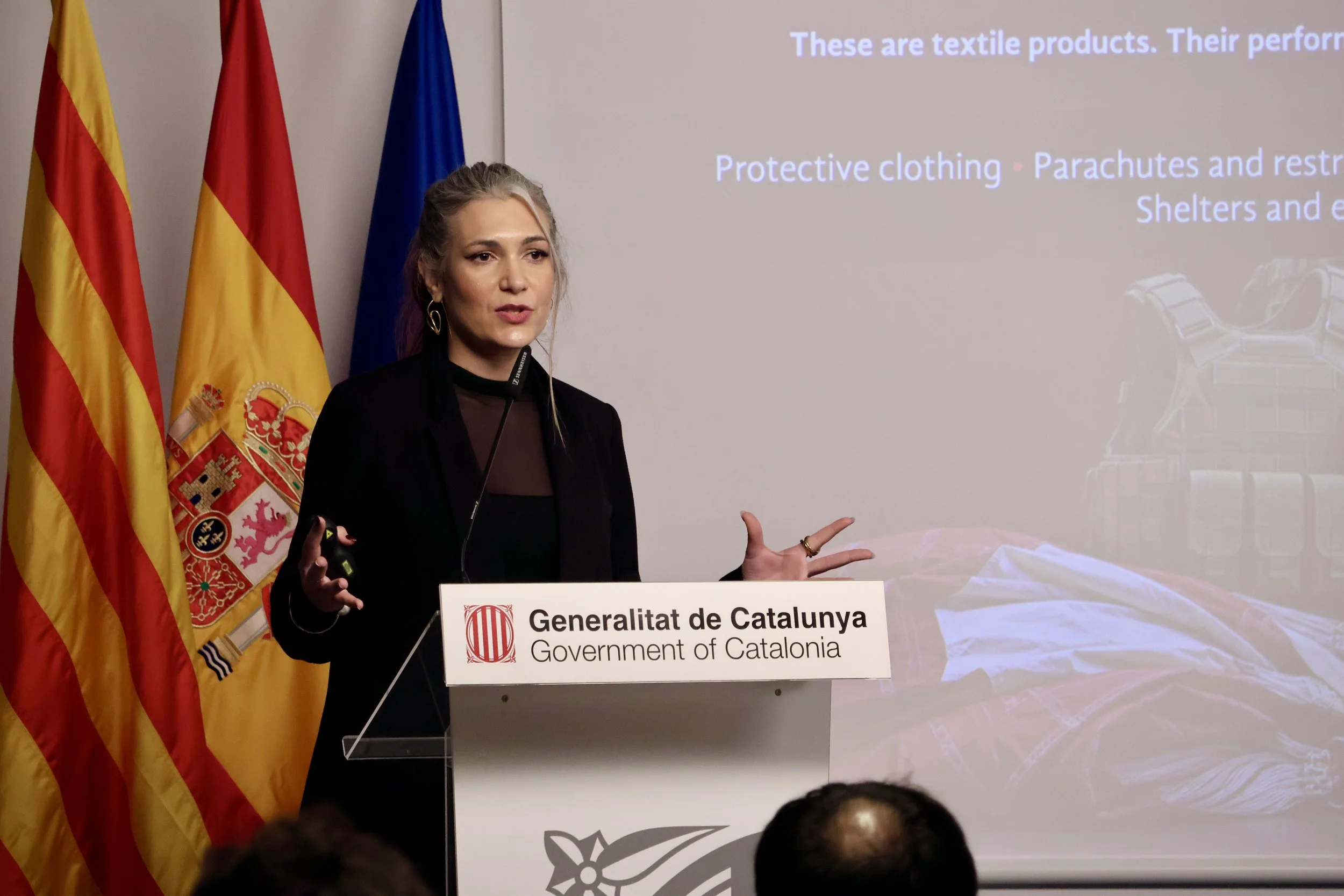
Lutz Walter and Judith Bosch, Senior Manager Smart & Technical Textiles at Textile ETP, together with Mario Jorge Machado, then launched the SmartX Innovation Strategy for Advanced Technical Textiles, Securing Europe's Textile Capabilities for Defence, Personal Protection & Aerospace. Developed with around 200 experts from industry, research and technology organisations, universities and end-user communities in the SmartX Innovation Hub, the Strategy charts a path to 2035 for three end markets: defence and security, PPE and civil protection, and aeronautics and space.
The Strategy is built on three building blocks:
Mapping and connecting Europe's technical textile ecosystem
Protecting mission-critical capacities at risk
Building the next wave of smart, high-performance and sustainable textile systems
It also sets out ten recommendations to EU policymakers and five collective lighthouse initiatives, designed as actions that no single stakeholder can deliver alone.
Part two: defence, aeronautics, space and personal protective equipment
Panel I: keeping Europe's defence textile capabilities
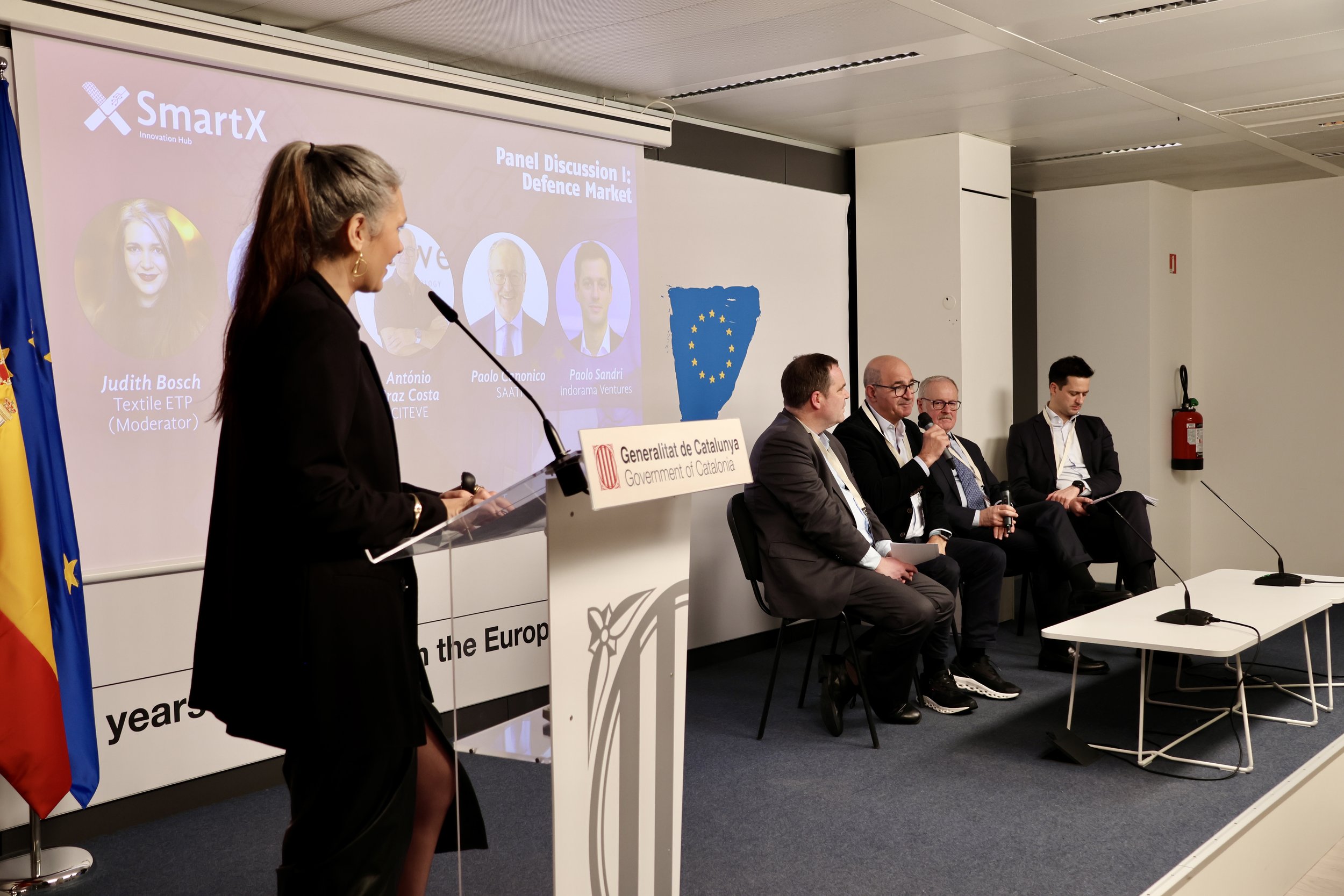
The first market panel focused on defence. Moderated by Judith Bosch (Textile ETP), it brought together Mathieu Schwander (European Defence Agency), Paolo Canonico (SAATI), António Braz Costa (CITEVE) and Paolo Sandri (Indorama Ventures). The discussion centred on how Europe can keep the production capabilities, skills and testing infrastructure that defence textiles depend on, drawing lessons from the COVID-19 crisis.
The speakers identified high energy costs, lost know-how and price-driven procurement as the main threats. To reach the EU's 2030 defence readiness goal, they called for a value-chain approach, more support to test and scale up innovation, and stronger security of supply.
Panel II: textiles for aeronautics and space
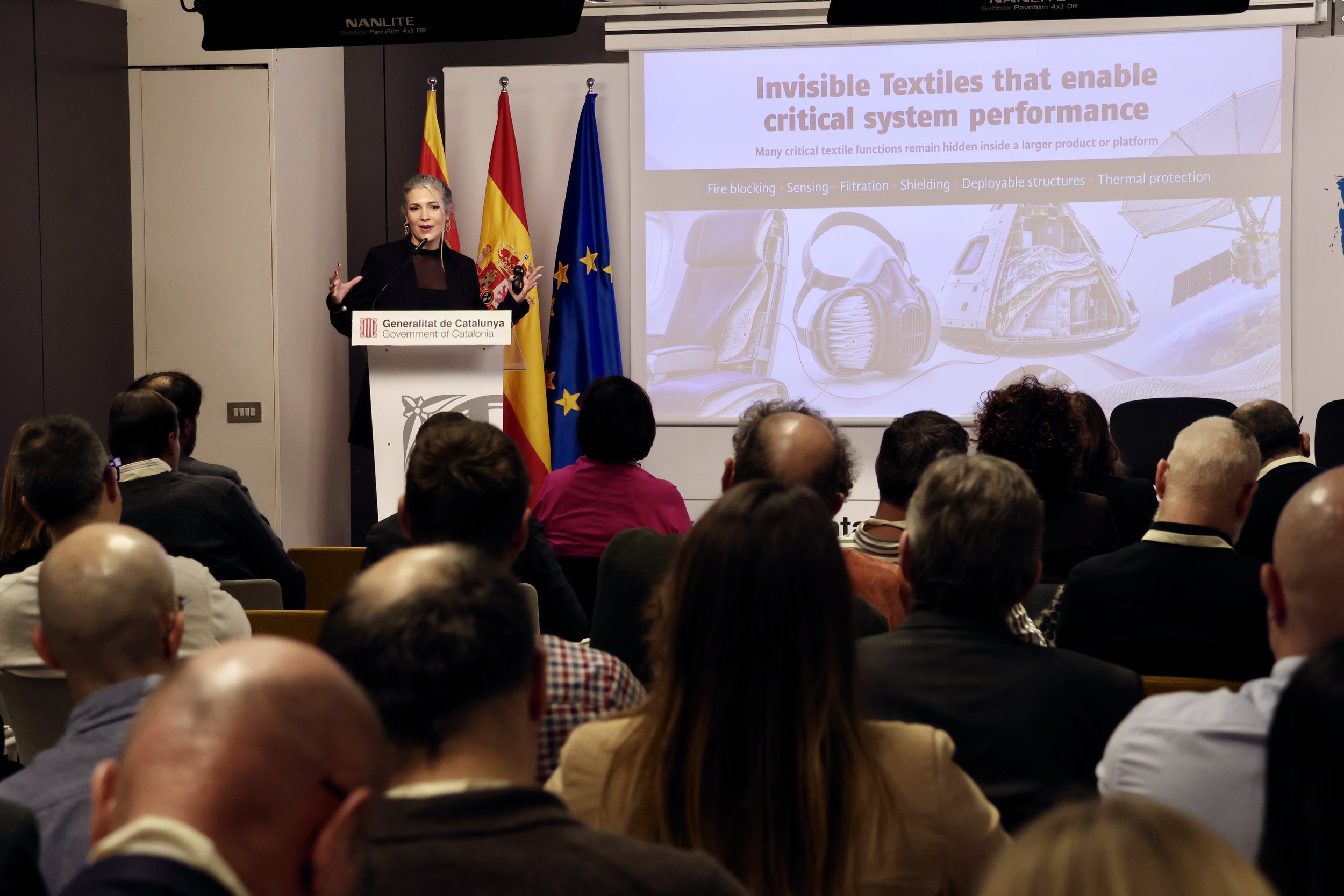
The Aeronautic and Space panel, moderated by Judith Bosch (Textile ETP), brought together Malgorzata Holynska (European Space Agency), Kira Heins (ITA RWTH Aachen University), Lluis Quintana (Thinex) and Stefano Carosio (STAM Srl) to discuss how textile companies can enter the space market.
The speakers pointed to funding routes such as ESA's Spark Fund and the Open Space Innovation Platform, and to the role of technology brokers in connecting SMEs with real industry challenges. Their advice to newcomers was practical: start from a concrete need, build a proof of concept, and look for applications on Earth as well, because a solution that works on the Moon can also work here.
Panel III: securing the European PPE supply chain
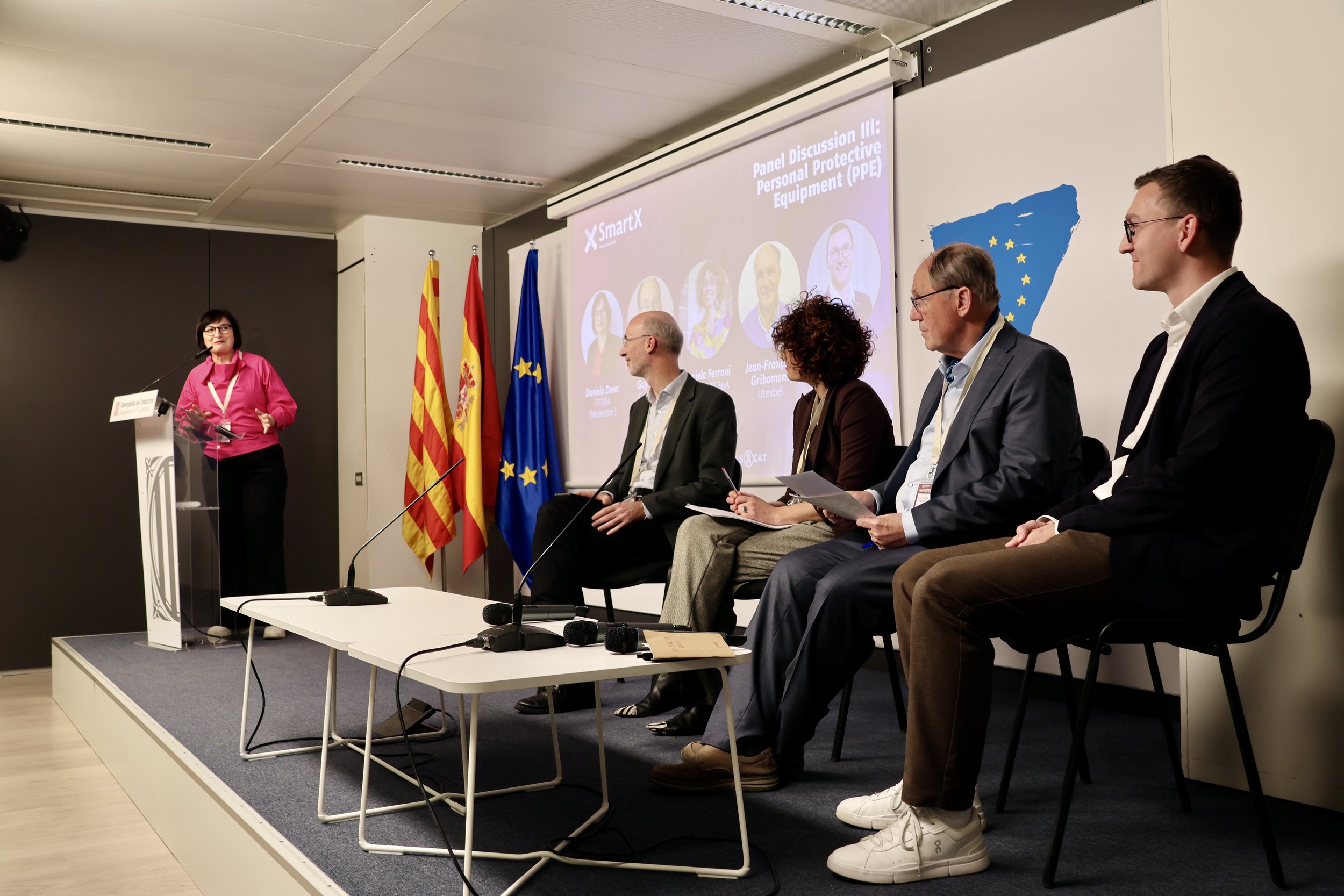
The Personal Protective Equipment panel, moderated by Daniela Zavec (TITERA), gave the floor to Guy Buyle (Centexbel), Daniela Ferroni (Grassi 1925 SpA), Jean-François Gribomont (Utexbel) and Daniel Frei (Getzner Textil) to examine the bottlenecks in the European PPE supply chain.
The speakers called for keeping the full value chain in Europe, from spinning to finishing, and for public procurement that rewards best value over lowest price. Access to materials, high-performance recycling, regulatory burden and labour shortages were raised as key challenges. Across all of them, the shared message was that companies need to work together as colleagues, not competitors.
Next steps: from strategy to action in 2027
The day closed with Lutz Walter and Judith Bosch outlining the next steps for building a European advanced technical textiles ecosystem. From early 2027, the SmartX Innovation Hub will start building a first version of the Critical Technical Textile Capability Observatory and a first set of member-led lighthouse actions. All interested stakeholders are invited to join. Across the policy, strategy and market sessions, one point came up again and again: Europe will only keep its technical textile capabilities in defence, protection and aerospace if industry, research and policymakers work on them together.
We thank all speakers and participants, as well as the experts who contributed to the Strategy. A special thank you to EURATEX and Tèxtils.CAT, and to ACCIÓ - Delegation of the Government of Catalonia to the European Union for hosting us.
The SmartX Innovation Strategy for Advanced Technical Textiles is available here.