In the past two weeks, our Senior Manager Smart & Technical Textiles Judith Bosch represented Textile ETP and the SmartX Innovation Hub in Shanghai at Intertextile Shanghai Apparel Fabrics and Cinte Techtextil China, two fairs covering very different but complementary areas of the textile industry. Taken together, the two events showed innovation from two angles: what a material can be engineered to do, and what becomes possible once that material is part of a larger industrial system.
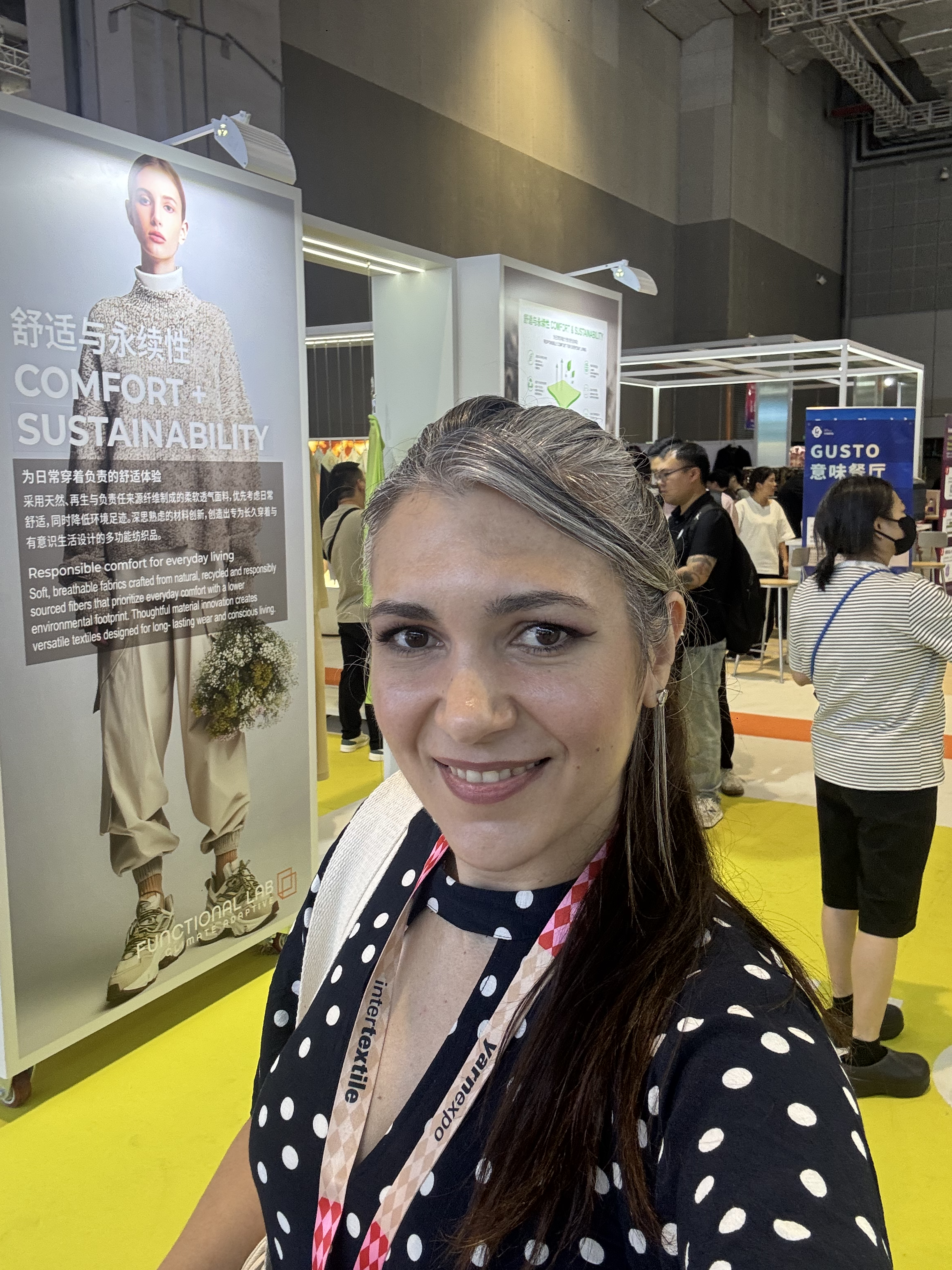
Intertextile Shanghai gave an immediate sense of scale, with around 240,000 m², more than 3,500 exhibitors and companies from 30 countries and regions. Innovation was strongly visible at fibre, yarn and fabric level, with developments in cooling, UV protection, moisture management and thermal regulation, and with increasingly complex fibre and yarn combinations. In The CUBE at the Functional Lab, what stood out was not the performance claims themselves but the link between a performance and how it is actually verified: waterproofness and breathability tested under simulated wear conditions, downproof fabrics tested through repeated rubbing, microscopic identification of duck and goose down, materials engineered for UV protection, wind resistance and abrasion resistance. Understanding what creates a performance, how it is measured and where it makes sense in a real product is as much a part of textile innovation as the material itself.
At the Textile Exchange panel on preferred production systems, the discussion kept returning to the same challenge: post-consumer textile waste. Textile-to-textile recycling technologies are becoming more sophisticated, but they still depend on the right feedstock, meaning enough material, known composition, effective sorting and consistent quality. Scaling recycling is therefore not only a question of the recycling technology, but of everything that happens before the material reaches the recycler. The same question applies to the highly engineered functional textiles now reaching the market, which will eventually become post-consumer waste as well.
At Cinte Techtextil China, the perspective shifted from the material to the systems in which textiles operate. A textile can become part of a vascular stent graft or a surgical suture. A high-performance fibre rope can work as a tendon inside a humanoid robot hand. Ultra-fine PEEK filaments and textile membranes are being developed for aero-engine noise reduction, hydrogen production systems and filtration in extreme environments, while other textile structures appear in thermal protection, PPE, liquid filtration, geotextiles, agriculture, marine systems, aerospace and infrastructure. Technical and high-performance textiles increasingly function as enabling technologies inside larger engineering systems: the aircraft, the robot, the medical device or the energy system is what gets noticed, rarely the textile structure that makes part of it work.
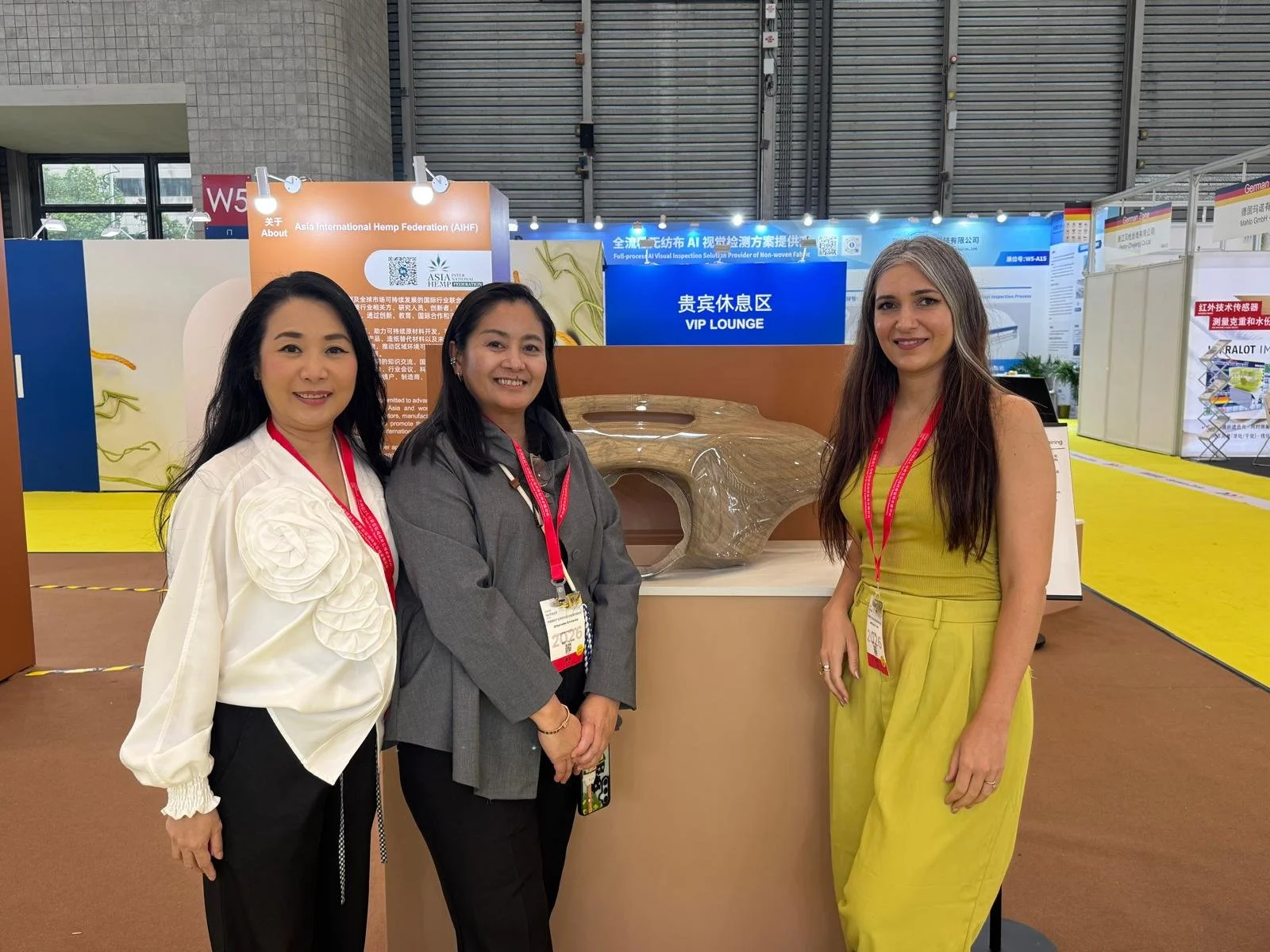
Industrialisation was the thread connecting most of these conversations. A discussion with the Asian International Hemp Federation highlighted the importance of the midstream, the step of processing the stalk and extracting the fibre at the right quality, volume and cost. In Thailand, part of this work has traditionally been done by hand, and universities are now developing machinery specifically for fibre extraction and processing, a reminder that innovation is sometimes not a new material but the machine that makes an existing one scalable. A similar picture emerged on the nonwovens side of the fair, where applications went well beyond hygiene into filtration, medical, protection, automotive and other industrial uses, and where the 2026 nonwovens programme was openly discussing how the sector should redefine its growth paradigm.
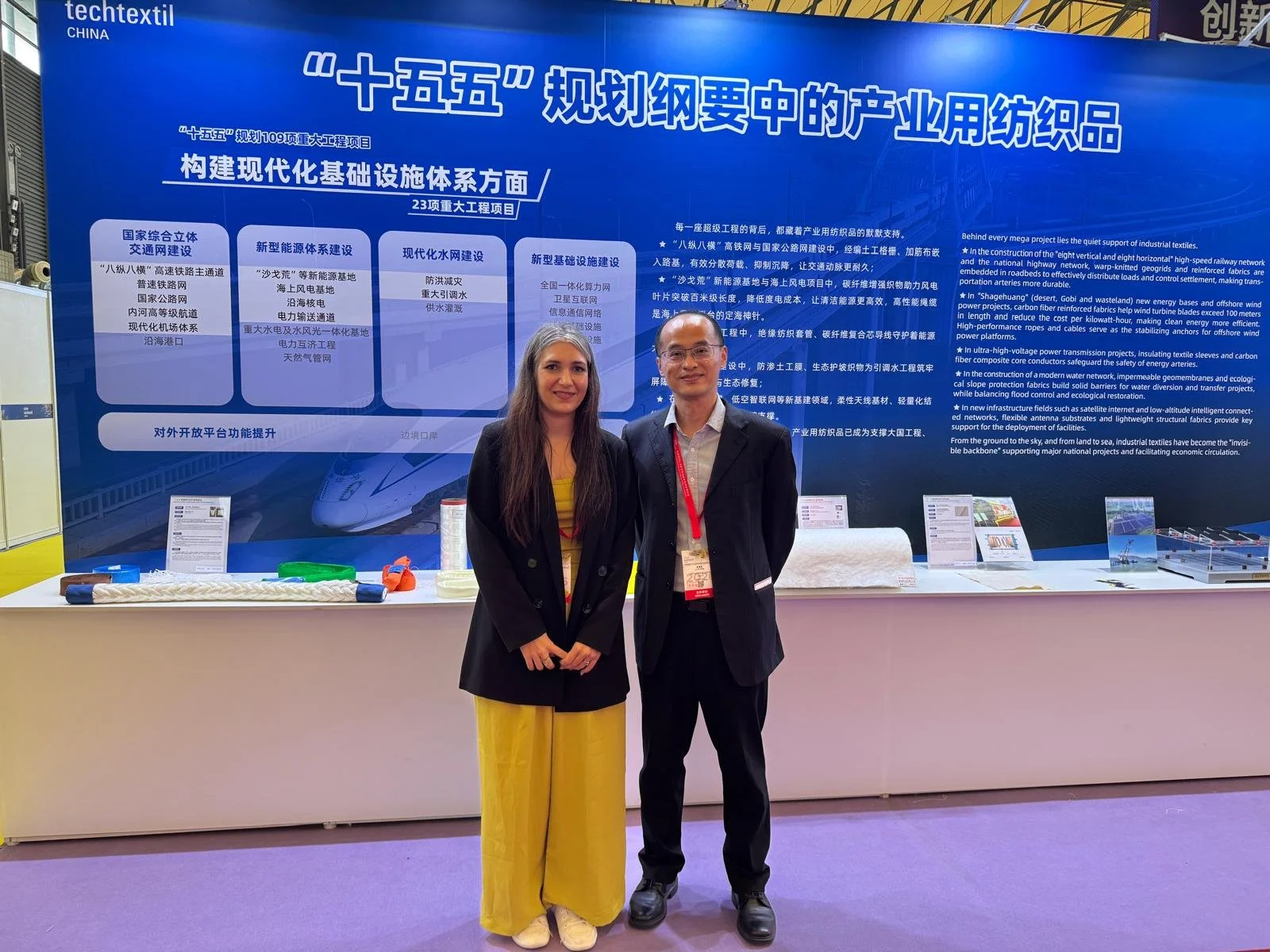
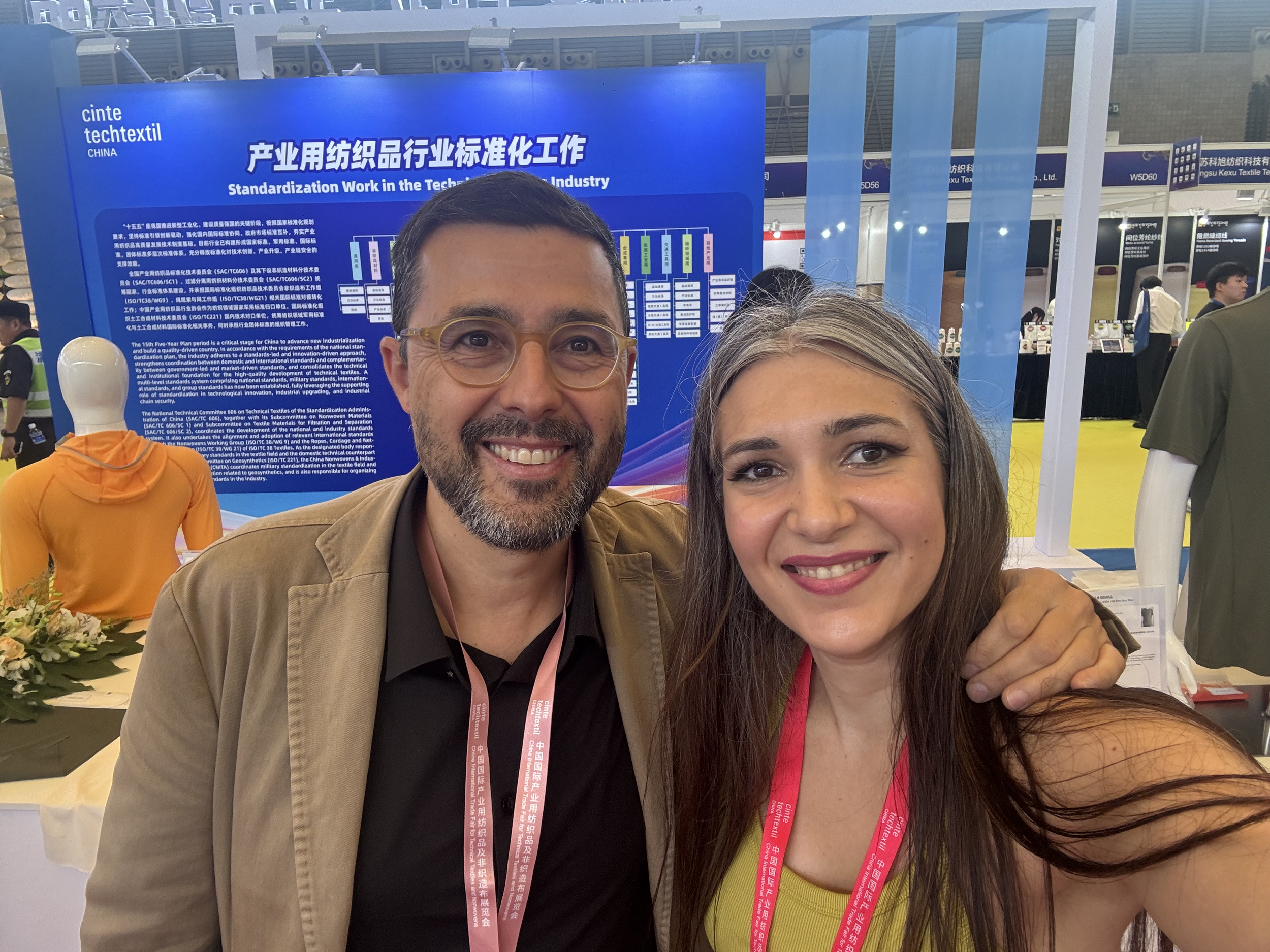
Much of this was framed by an exhibition dedicated to the role of industrial textiles in China's 15th Five-Year Plan, covering 2026 to 2030, where textile technologies were connected with broader national priorities in infrastructure, health, new industries, the green transition and security. What was notable was seeing the full set of pieces gathered around those priorities: companies, universities, materials, manufacturing capacity, end markets and standards. The display on technical-textile standardisation may look less spectacular than a new fibre or composite, but testing, specification, consistent production and market acceptance are a large part of what allows an innovation to move into industry.
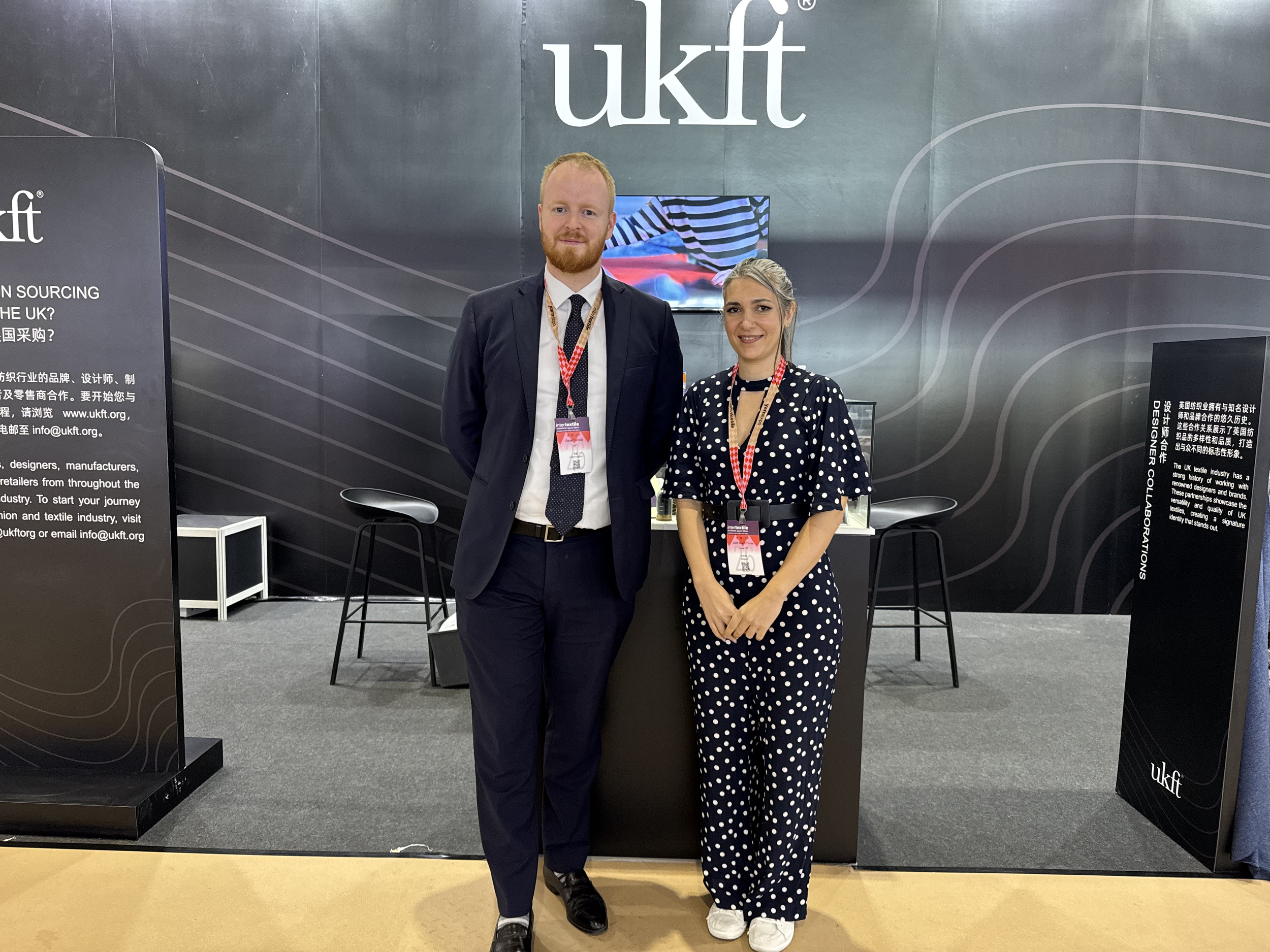
Across both fairs, European visibility felt limited compared with the scale of the Asian presence, which is worth reflecting on as global competition in technical textiles accelerates. In Shanghai, Judith also met Marc Ponsa from Polisilk the SmartX Innovation Hub network and Daniel Connolly from UKFT to exchange views on what the two events revealed about the direction of the sector.
For Textile ETP and the SmartX Innovation Hub, the main takeaway from Shanghai is clear: innovation does not end when a material works. The next challenge is making it manufacturable, repeatable, scalable and relevant to the right application.
Special thanks to Messe Frankfurt (HK) Ltd, Messe Frankfurt Locations, Eva Anderl, Sabine Scharrer and Liam Rodden for making this mission possible.